The lines, the vents, the power, the silent fury that no torment can tame.
I’m starting to push. The last hour or so has been all about being careful, slow, and respecting this beast, but it has still bitten me so many times. Working up slowly seemed apt, but it was nearly impossible. The rip-snorting twin-turbocharged V8 behind me is never calm; when the boost pressure comes up it tears at the 335 section slick tyres at the rear as if they were nothing. Screaming, whistling, popping and banging; it’s nearly impossible not to end up going too fast…
Power, beastly, seemingly unpredictable, a wild heart beats behind me; six hundred horses thrusting forth, lacerating their rubber shoes.
Braking deep now, deftly pushing the pedal knowing that too much pressure will lock the fronts and see me skate off the road, but too little won’t slow me from the seemingly absurd speed with which I am covering ground. The nose shakes as the front right chirrups to a stop. I gently release my foot, then re-apply; careful, precise movements amongst a cacophony of violent turbulence. I pivot my right foot as my left pushes the clutch, maintaining considerable brake pressure as my heel bats the throttle and I push the stick forward into second.
The discs are ferocious: they can stop just over a tonne of rampant red irascible motor car in short order. But once that V8 is on full song, the speed that gathers before the next braking point can easily catch me out and leave me hanging on through long braking zones silently begging the speed to bleed away before…
Huge steel discs are the claws of this monster, but their power is too fierce, they can lock at any time, ripping and tearing at the ground for purchase.
Turn-in, the rear is loose, the front is tight. It’s heading for the apex, right where I want it. This is too good to be true; for a brief moment the demon submits to my will and slices toward the apex, more ballet dancer than brute. It doesn’t last. The rear is too light, but that motor is not, and it brings its weight to bear as the rear end starts to come around, helping the car pivot into the corner but I know it’s going to need to be reigned in. I need to get on the throttle, but I am scared of it. In second gear, at this speed, one centimetre too much throttle and I will spin, but if I don’t act now that spin will be inevitable.
As I tap the top end of the throttle travel, holding boost whilst avoiding too much torque build-up, and apply a swipe of opposite lock she holds steady, and under light throttle the rear dances to my tune, pushing the tyres to the limit of spinning up on the short straight.
These are the moments where it feels right, where the man can control the monster; the envelope of control is small, but when within it there is a sense of satisfaction that cannot be matched. Short bursts of pleasure before the next worry, the next concern, the next time the wild animal bites.
Hard on the brakes again and moving over the track to attack the next, even slower, turn. Still in second, I turn in and once again she slices at the apex like a viper, inside wheel rolling over the kerb then we’re out again. Gingerly on the throttle, slowly building up pace, I crank her up into third as the next turn arrives alarmingly quickly. Left, positive camber, early entry and take the left-front as close to the kerb as you dare without clattering it and throwing the chassis off course, all the while daring, slowly, to push the throttle through the turn, knowing that when that turbo reaches sixteen pounds-per-square inch of rage the balance could change enormously. It comes. The rear breaks, a slight lift but the power doesn’t stop in an instant, I’m on opposite lock again, modulating throttle and trying to keep the back end in check as I drift towards the exit kerb…
It’s coming. Can I hold it on the road? Fear strikes at me and doubt riddles my concentration as I search for a way to stop this descent. The beast feeds on fear, it revels in my doubts, it wants me to fail, it is the last of its kind and it will not be tamed.
Grasping the wheel for dear life the outside wheels run up to the exit kerb and slide halfway up along it, pushed back to the relative safety as we scream to the 7800 rpm redline. Clutch, fourth, really moving now, heading down the Wellington straight to the next adventure.
In this car, this beast, this monster; every braking area, every entry, every exit, every time you touch the throttle, is an adventure. This supercar defines the genre and generates a passion that some of its contemporaries could never attain.
The last great stallion from its stable, this is the last car that was directly commissioned by Enzo Ferrari before his death. This machine exemplifies the Scuderia’s myth perfectly. Created forty years after the first born, the number of the beast is F40, and it will not be tamed.
As another year draws to a close, it seems as good a time as any to look back over the past 12 months and pick out a few personal highlights. In no particular order, and without further ado, here’s what tickled our sim bits in 2013:
Niels Heusinkveld’s “Talk & Drive” videos
Simon:- Niels has long since established himself as a prominent member of our community. He has worked on and released a number of stand out mods for the aging rFactor (and, along with a short list of other noticeable content makers, shown just what the original rF is capable of given some TLC and understanding), as well as having a professional role at Reiza Studios (not to mention ventures into hardware, and having fingers in a number of other sim-flavoured pies).
But here I want to focus on his relatively recent “Talk & Drive” series of videos, and one in particular. The T&D series do exactly what they say on the tin; Niels drives a car (often one of his own making) around a track, and talks about various facets of what we are seeing. Light-hearted and humorous, the videos are also insightful both into the machinery at his disposal, but also often some of the details that went into making them.
Be it teasing an NSX around a karting track, a no-nonsense first look at AC, or drifting an NSX around a snowy (and very slippery) Nordschliefe, the videos always entertain, and pay testament to Niel’s personality as well as his (more than ample) driving ability. With the NSX/karting track combo I thought the series might peak, but then he released what, for me, has to be the sim-video highlight of the year- Episode 7: Ninja Turbo F1 at Adelaide.
The signs of what are about to follow are immediately obvious as an out of breath and rather moist Niels introduces the video. As a demonstration of physicality, insane performance, and also some bloody amazing driving, this video is right up there. I honestly can’t think of a sim video that has had me as tense whilst watching it. During the first viewing (I’ve watched it quite a few times now), I realised I was taught and clenching my tablet, and would have literally been on the edge of my seat were I not literally, erm, lying in bed. As much as I find Niels’ videos interesting and entertaining, this one took it to a different level where it simply had me in awe; there are hairy moments aplenty. It also makes me very much want to go and spend some serious quantities of money on new hardware…
As 2014 approaches, I very much look forward to future installments of this instant classic series. One thing does niggle away at the back of my mind though; his “Merry NSXmas” video surely does beg the questions: what would one of these videos be like if Niels were drunk?…
If you haven’t already, just go watch it.
Jon:- About says it all really. Niels is a top guy and what he has given back to simracing over the many years is impossible to quantify, I avoided these videos for a while on the basis of: “oh, I’ve been sent another YouTube link” fatigue, but hearing Niels brace himself onto a brake pedal and grunt in exertion is a classic simracing video moment.
iRacing
Jon:- It seems to be quite fashionable to bash iRacing, as the evil empire over there in the shadows that tries to steal all the money anyone had. But the reality is that iRacing is a probably the best all-round simracing product in the market and that has not changed in 2013. Sure, for a new starter it costs a lot, but once you have the content you need, the subs cost is no different to buying two triple A games a year. For that you get problem-free online racing, a huge range of laser scanned tracks and an every growing list of series, all wrapped up into a “game” that gives you something to actually race for.
This year in particular has seen continued development of Big Dave’s (Yes, Mr Kaemmer, for services to simracing you have the honour of being magisterially titled thusly) experimental tyre model, and additions of two remarkable cars that test any sims physics to the limit. Whilst the Lotus 49 may not hit the mark on all yaw angles, the RUF labelled Porsche 911’s feel very pleasant to drive indeed. As well as this, in 2013 we have seen the addition of three not good, but great tracks in Interlagos, Montreal and Bathurst. If there is a car series that suits a driver in iRacing, I can see no reason why they would look elsewhere.
Sometimes it’s good to return to the past.
Simon:- The attention to detail and utter commitment to accuracy in their tracks is arguably unrivaled. I don’t dispute whether or not iRacing offer value for money, as I think it is something one has to decide for themselves. For some it all adds up and makes sense, for others it doesn’t. But when you see the man hours poured into the creation of likes of their Bathurst circuit, I think it’s very difficult to contest the asking price, and hard to argue they’re not doing things right.
BeamNG.drive
Simon:- What started with a few highly tempting (but very low on detailed information) videos fairly quickly became a tech demo release. As soon as the demo was available for purchase I slapped down my money, and put it to one side. Now before I go any further, I would like to add that I have spent very little time with it since (hence why nothing has been written as yet). I’m not here to laud it as being anything other than it is for me right now: an incredibly exciting development for simming with huge potential.
Why haven’t I spent any real time with it? Well, mainly because it was released at an incredibly busy time in my life where I was trying my best to avoid all distractions, and since then I just haven’t gotten around to sitting down and having a good play. But even if I were to play it and find it massively disappointing as a driving experience, I wouldn’t really care. For me this is just enthralling and thrilling as a piece of “look what can be done” technology. If they can craft a game around it that ticks all the boxes, then great; if not, I’ve no doubt this technology’s time will come. Watch this space.
Look past the fancy smashes and crashes, and the possibilities here are huge.
Assetto Corsa
Simon:- Before I go any further with discussing AC, I’d first like to clear up a couple of points (that sadly do seem to need to be cleared up):
My last piece was not serious. It was satire. Those who thought/think otherwise, read it again: there are a couple of subtle clues in there. It isn’t even really about AC.
I am not an AC “fanboy”, on their payroll or anything else.
This blog site is put together by a few of us with limited free time. We have jobs, families, commitments and so on, and get nothing from writing this site other than a small sense of satisfaction, a few complimentary comments, and a bit of abuse. As such, we write about things we want to write about. Not being sadists, we tend to spend time playing titles we enjoy, and we prefer to write positive things about stuff we like, than spend time putting ourselves through misery (no thanks to Kunos… <- ******THAT WAS A JOKE******).
I have written positive words about AC for no other reason than I feel positive about it. Since its release a short while ago, it has dragged me back to my rig countless times and has seen me rack up a not insignificant number of hours behind the wheel. My heartfelt apologies to any offended by my liking it and wanting to say so. AC still has a long way to go, and still has a lot of areas in which, in time, it really needs to prove itself. But as it stands, for a title at the current stage of development, I see far more to be happy about and to celebrate than to complain about. The recent arrival of the Grp A E30 M3 has given me what I always said I was looking forward to from AC, and right now I am not in the least bit disappointed with it.
If the next year brings continued development, improvements, refinements and content (inclusive and paid), I don’t see that position changing. Unless the AI and MP suck monkey balls. Time will tell.
I think I found the limits.
Jon:- I wrote the exclusive “first drive” piece on Assetto Corsa in AutoSimSport after a journey to Italy to meet the team in March 2011, and was lucky enough to be the first ‘journalist’ to get behind the wheel in the sim. AC has come a long way since then, but the core base of the physics was clear even back then. Over the last couple of years I’ve managed to have the odd go here and there when meeting up with the Kunos team but only recently, when the Early Access Beta hit the public, did everyone else get to see what I was raving about.
Seeing the sim “up in lights” in Steam is a pleasing moment in 2013, and though AC recently seems to have developed a little too much of a social media reality TV show, driving the sim itself never fails to raise a smile. Next year, however, will be the proof of the pudding for AC, and I look forward to the development as it goes on. Oh, and FERRARI F40!
Reiza Studios
Simon:- First of all, confession time: I haven’t purchased all of Reiza’s releases, let alone played them. As above, that is a simple restriction of time on my part. So I am not here to tell you all to go and play them and how brilliant they are. No, instead I am simply here to celebrate a company who is mixing tradition with some forward thinking. Whilst the conventional business model for sim releases has changed significantly over the last few years, Reiza have stuck to the good old ‘pick a series, model all the relevant cars and tracks, and give people a full series’ approach. Where they’ve diversified is in their choice of series; lacking the clout and finances required to go after the traditional big licenses, they have instead (no doubt partly through choice, too) gone for more abstract and obscure series, with Brazilian stock cars and now Brazilian truck racing given the full treatment.
Not everyone wants the disparate collections of machinery today’s sims tend to offer, and for those who want a full field of similarly specced (but not identical) machinery to race against, Reiza seem to be the only ones offering a solution. They’ve also continued to offer, in my eyes, fantastic value for money, with generous (too generous, perhaps?!?) offerings of content and updates to customers.
If it is a dying way of doing business, it’s at least nice to see someone carrying the flag and making sure it goes out with a bang, rather than a sad “remember the days of Papyrus?” whimper.
And you thought the F40 had some torque?
Jon:- When GTR3 was rumoured to be coming up from Simbin there was a remarkable reaction in the community, and I think this was partly related to the nature of the previous GTR sims. It is becoming increasingly more and more difficult to licence an entire series and pick up all tracks and cars in one package, as so many of the entities involved have become savvy to securing their own royalty deals. This makes it even more pleasing to see a small group of, what once were, modders, grabbing the bull by the horns and sticking with the tried and tested method and making it work; not unlike Ian Bell’s development of GTR1.
Reiza’s products ooze detail and though the underlying engine may struggle to display graphics on the level of pCARS or AC, each one of their products deserves a space on any simracers hard drive. I mean, where else can you drive an enormous racing truck?
DIY pedal “mod”
Simon:- More. We always want more. More and better than before. Oh, and it has to cost next to nothing. Otherwise it’s a ripoff. Well this year saw me make a very small and cheap modification to my hardware that has made a surprisingly large difference to the experience. After the best part of 10 year’s solid service, I decided to make a modification to my trusty BRD Speed 7 pedals. It wasn’t a fancy load cell mod or anything near as adventurous, rather I simply replaced the pedal pads. £10 on eBay saw a genuine set of OMP rally pedals delivered (for free) from the Italian factory to rainy old York. A quick trip to B&Q, a small pack of screw cup washers, 10 minutes with some pliers and some slightly sore hands later, and my pedals were updated to be a little more car like and a little less computer peripheral. The effect? Apart from just generally feeling nicer underfoot, the key benefit is avoiding the need to contort my legs in weird ways to avoid accidental throttle presses under braking. Not only is braking vastly improved, but heal and toeing is now much easier and more comfortable. For a few quid and a little effort it has made a big difference to my sim driving experience, and leaves me kicking myself for not doing it earlier. For those of you who are angered by the thought of paying for anything, I’m sure you could model something from leftover tin foil or whatever you have lying around.
Before and after. Accidental throttle presses be gone.
rFactor 2
Jon:- Quietly plugging away in the background the small team at ISI still have a racing sim on their hands that is daring to dream when it comes to the overall race driving experience. Put simply, nothing does weather, live track rubbering, and overall customisation better. Whether rFactor 2 will go on to become the commercial sim platform of choice, as its predecessor did, remains to be seen. The downside is that it can be troublesome for the non-tech savvy to get the sim running right, and some aspects of the sim seem curiously worked out (I see you there, baseline setups!). In beta now for around two years it will be fascinating to see where ISI can take this platform in 2014.
Track rubbery goodness.
Simon:- It seems quite easy for rF2 to slip under the radar at times. ISI seem quite content to just quietly get on with things without much fanfare along the way. So much of what ISI are doing brings a smile to my face; the environmental side, for example, is so far ahead of what others are doing as to be in a league of their own. But whatever it is, for whatever reason, it just hasn’t quite clicked with me recently. But whilst rF2 might not have been receiving much seat time from me lately, it most definitely has my attention and, like Jon, I’m excited to see where the new year will take it. If Tim Wheatley keeps working on licenses like he has been doing, I dare say sooner or later I will be lured right back in.
iGPManager.com
Simon:- As I have written before, I am quite a fan of iGP Manager. Christmas day saw the final race of The League Of Rooks’ sixth season, and thankfully all major honours were already tied up and so attendance wasn’t required. This season has seen a few changes in the league, with perhaps the biggest being that we have seen a number of managers reaching the level cap (that’s another discussion for another day…), and so things are plateauing at the top and bunching up from below. Although far from what could described as a tight season for top honours, there was an increased level of competition across the board, with a number of closely contested battles throughout the running order.
The closing up of the field has put more of an emphasis on the manager getting things right on the track rather than behind the scenes, and subtle changes to strategies have made all the difference from race to race. Six seasons (a bit over two years) in, and whilst a few names have come and gone, I know I’m not alone in still being rather hooked. Next season should only see things get closer, and there are probably a good eight or so teams who have a real chance of competing for wins, providing their managers don’t forget to top up the fuel (yes Suresh, I’m looking at you… ;-)).
Your office for the next 90 minutes.
Jon:- iGP Manager has not really changed much since it’s inception, with focus from the small development team being on stability over the addition of new features. Regardless, the formula for the game has not needed much change, because it is a game of constant learning. Very much in the style of games made twenty years ago, this game leaves the onus on the player to work out what it is they are supposed to do, nothing is on a plate, and so a fresh league starting up with new players will see victory going to those that work it out the fastest. Over the two years and over a hundred races we’ve contested, each new development has been a race to see who can get there first and the competitive order has been shaped by those with the most open minds to creative thinking. As Simon notes, the teams are all levelling out now, which means a different focus will be required for us all.
Most of all what I have enjoyed about iGPManager is that every Wednesday a group of sixteen players have got together to race, but not in a “sweaty in your sim rig” way, but in a “sitting quietly with a beer” way. Friendships have been bolstered and in some cases formed anew, and a sense of kinship exists that makes us all celebrate milestones for other players as well as unite in annoyance against the dominance of team Spamsac! iGP races are a cherished time of the week for me, regardless of where my drivers bring the cars home, and I hope it will be for many years to come.
The Community
Jon:- A highlight? What? Yes, yes, I know, in recent years the simracing community has kept up with the rest of the world when it comes to its rants, entitled pricks and comments sections that should be deleted and put at the bottom of the sea.
However, at the same time, solid community sites such as RaceDepartment, DrivingItalia.net, NoGrip and SimHQ Motorsport have retained a semblance of normalcy amongst the many maelstroms that have come and gone. As well as this there are dedicated game forums for the likes of iRacing, ISI, Kunos Sim and SMS that do a great job of bringing players together where other “emergent” social media may be failing. Ultimately, this community grew out of web forums (and newsgroups, hands up who posted on rec.autos.simulators back in the day?), and to this day they can remain a great source of information to newcomers and experienced hands alike, provided they can find the right place to look.
The natural downside is that, just as it ever was, too many people still don’t read through their post and have a think before clicking “post”. It remains a truism that taking a quiet moment to think about whether one’s post will achieve anything productive is a golden art that we all need to try to engage sometimes.
Can’t we all just… get along?
Simon:- It’s all in our hands guys…
So there you have it, a few select highlights from the past year. If we didn’t mention something, it doesn’t mean we hate it or are biased, or they’re not paying us enough; it just wasn’t something we picked out in this hurried together list. Thanks for reading, all the kind words and the feedback this year, and wishing you all a happy and healthy 2014.
I’m pissed off. In case it escaped your attentions, it was Christmas day yesterday. What should be a day of joy, gifts, beer and sprouts, was for me a day of great misery and sadness. It really was probably the worst day of my life.
“Why so sad?” you might ask. I’ll tell you why: I was betrayed and let down. You see, Kunos Simulazioni have announced some DLC… and expect people to pay for it. Yes, I kid you not: they want people to pay for more content.
This is just all so wrong on so many levels. First of all, let’s rewind a bit to try and explain why I am so pissed off about this. They revealed that on the 24th of December, they would make an announcement. They quickly clarified that this would not be something being released to download. So obviously, taking this on board, I came to the only logical conclusion: they were going to release some new content or features for us to download and play with. Then the announcement came: they were going to laser scan the Nordschleife (the track voted most wanted by users of AC), put together a pack of ten cars (as voted for by the users of AC), and that this would be released towards the end of next year.
Well… where to begin? It really is difficult to know where to start. These polls to vote for most wanted tracks and cars were a couple of weeks ago, so surely they could have stuff ready for release now? This is simply greed and laziness on their part; they want to lie back, do nothing, rake in all the money. Speaking of raking in money, here comes the real kicker: they want people to pay for it. Unbelievable… They want to have a holiday in Germany, spend ages on the Ring having fun taking measurements, and then they want us to pay for it all? Yeah right!
I personally don’t like the Ring anyway, so how can this make any sense for the community as a whole? Surely if I don’t like it, no one else will? And besides the fact no one really wants the Ring in AC, they could easily do, what, 40-50 other tracks as easily as the Ring, and give them all to us for free? And these ten cars? Well I personally want a version of my Mum’s Peugeot 107 in there, so what the fuck would I want with these cars? They’re not all exactly what I would choose, so what a load of bollocks, and as if anyone else would want them. These guys really are fucking clueless.
If you’re still not understanding why I’m so angry, let me try and break it down. AC isn’t finished yet (despite them forcing me to buy a copy!). It costs £30 on Steam to get AC in Early Access form (£30! Can you believe it?!?). The game isn’t fucking finished! It doesn’t have all of the content they PROMISED it would have, it doesn’t have all of the features they PROMISED it would have, and they force me to pay £30 for it?!? I paid £30 and have only had 50 hours of enjoyment from it so far, and it isn’t bloody finished… What planet are these guys on? Do they honestly think I paid £300 for my new graphics card to go and spend more than a few quid on content to play on it? They’re in dream land.
Their “plan” is you pay less now than you will when the finished game comes out (more than £30!), and they will keep working on it and adding stuff. Then once they’ve put in all of the stuff they said they would, you will be able to get extra stuff on top… For a fee! That’s right: once they deliver what you’ve paid for, to get extra stuff you have to pay. This is just so unfair.
I got my calculator out and crunched a few numbers. They have about ten members on the team; AC must have easily sold like 10 million copies by now, so that’s 30 million each they have AND COUNTING. 30 million each for playing on computers whilst on holiday at a race track. And they want us to pay money in the future for more stuff to come? Pffff, they can go fuck themselves.
To give them credit, there is one thing I can’t fault them on. They were clever enough to trust that people like me in the community would take stuff at face value, actually read things that were said, and also think things through calmly and rationally. But that’s too little to rescue things here. That’s the one thing they got right; everything else was a clusterfuck of epic proportions.
So yeah, thanks Kunos, thanks for FUCKING RUINING CHRISTMAS. You guys don’t know what it’s like to want to spend Christmas with friends or family of loved ones. You don’t know what it’s like to have to pay bills and stuff. Whilst you live in your millionaire mansions snorting drugs off of scantily clad ladies strewn across Ferraris and Paganis, some of us live in the real world where numbers have to add up, where incomings have to meet outgoings, and where money doesn’t just grow on trees and everything doesn’t just come for free with a click of the fingers. FUCK YOU.
So happy Christmas everyone. I hope for some of you it wasn’t ruined as it was for me. I’m off to blow money on shit I don’t really want or need to make myself feel better. Then maybe later I’ll go on 4chan and make disparaging remarks about female genitalia whilst wondering what it’s actually like in real life. Real life. Some of us have to live in it.
Asseto Corsa (AC) continues to be the hot topic of discussion at RAVSIM HQ. This past month has given me lots of seat time with AC, and lots to reflect on. The other night I was listening to a recent episode of the rather excellent PC gaming podcast The Crate & Crowbar. The discussion moved to the subject of the latest Assassin’s Creed (AC… Hmmm, let’s just call it Assassin’s Creed) game, and the difference in experience that some of the team had enjoyed. In a previous episode, the game had received high praise and was noted for a number of accomplishments and for generally excelling. One of the areas of praise was that of the effortless movement of the character; the fluidity with which sequences of moves and actions could be strung together with a few mere button presses, and how a sense of empowerment was granted to the player as the game’s mechanics allowed for control of these wonderful on screen acrobatic heroics. However, in this latest episode, one of the team was recounting a somewhat different experience. He’d seen the GIFs and Youtube videos demonstrating these wonderful theatrical flurries but, he said, in reality that is rarely how the game pans out. You find your character instead just walking into objects, or clumsily jumping in the wrong direction, and generally just destroying any sense of being this skilled, no-nonsense protagonist. The conversation came to the conclusion that you need to understand the rules of the game, and play accordingly. You need to realise the patterns that emerge in structures and level design, and really you need to look at the game as it wants to be played, in order to then be able to play it as intended. There are bounds, there are rules, and there are constraints, and it is only when you accept these and adhere to them that, slightly paradoxically, you are then rewarded with (at least the impression of) the freedom to explore and make your way around unimpeded and with elegance and aplomb.
All games to some degree are subject to this, but certain titles and, at the broader level, genres are more susceptible than others. It could perhaps be argued that simulations should not be too heavily affected in this area; although each title will offer up its own selection of content and associated experiences, surely the “rules” of the simulation should largely adhere to the rules of the reality which it is simulating? For a driving sim, the laws of automotive engineering (or more broadly, simply physics) should dictate what can and can’t be done, and consequently what the relevant consequences are for each and every action. But of course life isn’t quite so simple, and because life isn’t so simple, nor is simulating it. From the off, all sims constrain what you can do through sheer necessity. If they didn’t, they would end up nearer GTA than the titles they are; they would be sandbox titles that happened to feature cars and tracks. But this isn’t the type of constraint I am thinking of here. The reason the Assassin’s Creed discussion really struck a chord with me and my experiences with AC was something much subtler. It’s not limited to, but is epitomised by, one simple thing: kerbs.
Yep, they’re kerbs all right.
Driving AC I have made a number of observations. Firstly, I don’t think I have ever happily sat down and as effortlessly racked up so many hours and laps with a title. It never feels an effort to play it, and I actively want to play it more. The reasons for this lie beyond it simply being a good title with content that appeals to me. Rather, it lies in the details and the depth of the experience, and in some ways as much the experience and feelings it doesn’t give me as those it does. I’m not talking about constraints or a removal of freedom here, I’m talking about a lack of a sense of unfairness. AC not only gives you control of the car, but it gives you a fair arena in which to use it. You don’t find yourself questioning what just happened or why; if you had a hairy moment, you know why you had that moment. When things get out of shape and you end up pointing the wrong way, you know it was your fault. Without naming names, some other sim titles have consistently left me feeling a sense of frustration, a feeling of “That wasn’t my fault” and “That wasn’t fair”. For sure there is likely a bit of ego creeping in there at times, but I can be open and honest about my limitations of reflexes and car control without diminishing the point: some titles do things to the player that the player’s actions did not deserve. Whether it be a funky quirk in the modelling that sees an odd and unpredictable (to the real world) phenomenon in the vehicle dynamics and response, or some shortfall that rewards doing things you really shouldn’t be doing, just as Assassin’s Creed’s limitations can quickly evaporate any sense of control and proficiency, so too caveats and pitfalls in simulations can quickly lesson the experience. But whilst in a game like Assassin’s Creed the player controls an on screen avatar who ends up looking like a stumbling drunk, in a race sim there is not that degree of separation between the player and on screen action. It is the player who is directly affected by strange behaviour, and the player whom all of the failure is projected onto. This can lead to a particularly dissatisfying and, ultimately, unenjoyable experience.
Pushing it a bit.
AC does not give you a sense of immortality and superhuman abilities, but rather it gives you a fair shot at doing your best. In tens of hours and hundreds of laps, I have driven over the kerbs at a few of AC’s tracks probably thousands of times. Not in one single instance (I mean that, literally not once) has something happened where I’ve been left baffled or confused. Not once have I been, in my eyes, unfairly spun around or thrown off the track through no fault of my own. Don’t get me wrong, those kerbs have spun me around and thrown me off track a fair few times, but each and every time it has felt… right. I’ve sat there saying “Fuck!” and shaking my head, but my temptation has never been to rip my wheel from it’s frame and force it through the monitor; rather it has been to raise a hand and give myself a smack across the head (I’m speaking figuratively here; I don’t have a problem). I also don’t mean to say that every time is has happened I knew it was coming, that I’ve never been caught by surprise, because I have. The difference here is that whilst only experience will tell you quite what the limits are and where they lie, in AC you can feel yourself reaching and crossing those limits. Whilst I’ve never deliberately thrown a car off track, I do know when I’m pushing hard, when I’m getting a bit out of shape, when I’m heading to the kerbs with a bit more speed and a bit more load than I did the previous lap. And when the moment happens, when the limits get crossed and something gives, I might not necessarily have seen it coming, but it was never a surprise in hindsight.
Getting greedy.
Every sim out there has its wonderful looking promo and/or fan-made videos, showing the cars doing this or that. But just like with a well executed maneuver in Assassin’s Creed, the reality of playing some titles often seems to be a somewhat different experience. I’m not saying driving at the limit in reality is easy, or that it is in AC. But I feel I should be able to confidently approach a kerb and know, provided I’m not on the ragged edge, it will present no danger. AC has given me plenty of sphincter-clenching moments, but it is when I know I’m getting into that hazy area towards the edge of the car’s, the tires’ and, just as importantly, my own limits, not every time I enter a corner, wondering “What’s going to happen this time?”.
I’m loathe to start making direct comparisons between different sims because, whilst in some respects they are intrinsically the most worthwhile benchmarks, it just all seems a little… unproductive. So instead, I am going to draw comparison with a different game entirely: Super Mario World (SMW) on the SNES. They might seem somewhat disparate bedfellows, but stick with me. As with most of the Italian plumber’s outings, SMW is instinctive and utterly accessible. For large portions, it is generally a fairly “easy” game (though by today’s Playstation standards it actually probably presents quite a challenge), and progress is fairly swift and wholly rewarding. But how challenging a title it can be depends largely on how you approach it. Enter with a mindset of simply wishing to see the end, and it can be accomplished by most experienced gamers without working up too much of a sweat. However, delve deeper, and try and play with personal targets in mind (speed runs, collect all coins, avoid losing any lives, complete all 96 levels etc.) and, well, it can be just about as challenging as you desire (some of the later secret levels are ingeniously fiendish…). However you play it, whatever your standards, ability, or goals, one thing SMW always seemed to get exactly right was that it gave you perfect control, and consequently if you died, missed something, failed a level, whatever, frustration and anger could only ever be directed in one direction: at yourself. SMW can be incredibly challenging and difficult, but it always feels completely fair with it. This is my “Super Mario World test” by which all games I play are ultimately judged.
Perfection? Near enough.
In this respect, AC haunts much common ground. Go at it eight-tenths and only a severe lack of concentration or a mistimed stretch for that alluring can of beer will see things going horribly wrong. You can head straight for those kerbs lap after lap, clip every apex, nail every exit, hit your braking marks… It’s really not very challenging and, well, why on Earth should it be? Start turning the wick up, and accordingly the challenge climbs to meet you head on. Start exploring the limits of adhesion and you’ll be approaching those kerbs with a good chunk more pace, and with the tyres under a good deal more duress. Sooner or later you’ll find those limits, and go past them. But whilst in the past this has often meant insta-spin, here it typically means a bit of a moment (on track or on the grass), a loss of momentum, and on you carry, lesson learned (and possibly tyres needing a little breather). Nudge that dial to the Spinal Tap setting, and things will typically go wrong pretty quickly and you simply won’t be able to sustain it. Be it exploring the limits of the car, the tyres or the driver, it all just feels a very natural, organic process and, as a simulation, just as it should be. You don’t have to learn how AC does these things; it doesn’t put you on a ledge with a blind leap of faith to see what lies below. Instead it gives you a fair and consistent world in which the same action, all things being equal, will get the same reaction; where appropriate inputs are seemingly always rewarded with the right outcome, be it success or failure. The focus doesn’t fall on AC to see what it does; the onus lies with you, to see what you do and how you do it. To see if you can do it.
Braking zones aren’t something to fear, but something to savour; the car squirming under a firm foot, loose and on the edge, but controllable. Throttling out of a turn on the limit is not a case of rolling the dice; it’s a judgement call, with an unsaveable spin rarely the outcome for a slight misjudgement, but rather just some lost time. And the kerbs are not something to approach with caution; they are something to attack with respect, to be used to your advantage and to be exploited. Getting it wrong means you got it wrong, which in turn means you can do something about it to get it right. And when you do get it right, it’s down to you, not luck. Getting it wrong drives and motivates you to correct your mistakes, getting it right rewards and drives you on to do it again, only better, and faster.
This would be “Spinal Tap” level push then…
As I made pains to stress in my initial words on AC, it isn’t perfect, and I predicted that undoubtedly bugs and problems would arise. Just as night follows day, so they have, and a number of issues have been found, reported, and a large number dealt with. I personally have been affected by two issues in particular: the E30 M3’s apparent lack of low end torque (yet to be resolved, but duly noted by Prof. Aris), and throttle response curves that put ~80% of the effective throttle range in the final ~20% of the throttle pedal input (note: numbers plucked from my rectum), which were promptly adjusted in v0.3.1. Having decided 10 hours in the E30 at Magione was quite enough, I moved onto Mugello (big congratulations to the Kunos guys there: it is fucking wonderful), where these issues really started to show themselves and compound one another. The long straights and significant elevation changes forced the E30 to be down shifted like an old Volvo towing a caravan up a steep Yorkshire hillside road (there’s always one…), where suddenly you’re in the peaky top end of the power band with very little throttle modulation to play with. I did eventually put the E30 to one side for a bit and switched to the Exige Scura (utterly brilliant) where the semi-slick tyres and incredible chassis meant the throttle range presented less of an issue. It was inevitable that such problems would arise, and there is encouragement to be taken from them: the team have been very quick to verify and respond, either with explanations of observed behaviour or, when necessary, fixes. But also, so far I am not aware of any real issues with the core engine and physics model. Driving the E30 down on grunt and with a dodgy throttle just felt like, well, driving an E30 down on grunt with a dodgy throttle. It will be interesting to return to it with the amended throttle response and see how it affects, if at all, the feeling of a torque curve made of Swiss cheese.
Over the past month a number of patches (bringing both content and fixes) have been released which have seen AC slowly grow and further refined. I think about my 40+ hours logged on Steam and the fact I have only 3 lap times set in the profile, and just how much I have left to discover and explore. Yet I am as excited to get back into the M3 (after its visit to Aris’ garage for an engine refresh) as I am to jump to anything newer or faster. I’m following a natural (for me) path through the content, and making my way through AC the way I want to. I’m choosing my challenges, and right now I’ve barely scratched the surface. I feel I’m still only a few levels into World 1, albeit with all coins collected and my speed run times getting there. What’s more, I’m loving every minute; successes and failures. I should probably try losing a few less lives though…
My bum hurts. Well, I can barely feel the thing, but there is something of a numb discomfort in both cheeks. My lower back aches too, the undersides of both thumbs seem to be demonstrating that slightly painful tingle indicative of the early onset of an emerging blister, and my eyes are stinging. The backs of my thighs aren’t feeling too great either. My senses feel a bit off too, come to think of it; my hands seem to be half stuck in a crab-like clawing shape and my sense of touch seems disconnected from the things around me I am trying to grasp. My eyes and ears appear rather out of tune with my surroundings, and my head is buzzing.
It is half past ten at night, and for the last three and a bit hours I haven’t moved from my race frame. Rewind four hours or so and I was just getting in from eight hours of work, sitting staring at a computer. I hastily threw something together that those of particularly low standards might term food, and gazed at my neglected race frame. The piles of clothes, children’s toys and those random carrier bags filled with “stuff” that have a habit of accumulating offered a strong hint as to the fate that had befallen my once prized rig.
Whilst over the last few months I have often looked to that side of the room, thought for a second about clearing some space and turning some laps, before shrugging my shoulders and emitting a silent, apathetic “meh”. A few hours ago there was no such struggle to muster the motivation required to emancipate my rig from its new found role of dumping area and fire up the old beast.
This past weekend saw the long anticipated release of Assetto Corsa (in Steam “Early Access” guise, at least), and there really weren’t many things that could stop me immersing myself in the world Stefano Casillo and his band of merry (and, no doubt, slightly tired) men have spent the last few years crafting. A steady stream of slick screenshots, not-so-slick-but-equally-tantalising videos, and content announcements has kept the unwashed masses abreast of developments. Plus, of course, the previously released “Tech Demo” showcased a glimpse of what Assetto Corsa (AC) had to offer as it stood back in February, and gave many their first opportunity for some hands-on seat time with this much sought after title.
Lately I have been aware that AC’s arrival was imminent, but frankly, I’d tried to forget about it. I am all too aware of what can, and often does, befall the best laid plans of mice and men, so the easiest way to avoid disappointment, I felt, was to just take a step back and try to temper my hopes and expectations. But there I was, dubious foodstuffs consumed, and there was AC, downloaded and ready to run. To those who know me, it will be no surprise that my first port of call was the BMW E30 M3. When I heard the news that this car was to be included in AC, my excitement was palpable. When I learned it would be included in the Early Access build, the excitement went up a notch. Here I was choosing my paint scheme and finally ready to drive. Then I lost three hours.
Ahhhh, at last we meet.
In total I have run AC for about eight hours now, and apart from about five laps or so across a couple of other cars, that time has been spent exclusively in the E30 at the Magione circuit. This release might currently offer up what some would term a fairly meagre selection of content, but, in fact, the number of cars and tracks only tells you a small part of what AC offers. It hammers home how absolutely ridiculous the willy waving one-upmanship of the GT and Forza car catalogues are, and how utterly unnecessary such content lists are to boot.
The road-going E30 may be just one car, but it offers up a wealth of experiences in AC. I have yet to touch any of its adjustable aero parts or even tyre pressures, but have run a good hour or more on each of the three selectable tyre compounds. Such is the deftness and subtlety of the model and implementation, that the variation in experience provided by swapping the black round things eclipses that offered in some lesser titles between different cars. Along the gradient of successive tyre upgrades, the character of the car subtly yet, conversely, massively shifts.
On the default “90’s street tyres”, the car feels relatively supple and soft. Whilst the S14 unit under the hood has never been particularly revered for its torque, its peaky power delivery makes short work of overwhelming the rear tyres and inducing oversteer. It is easy to look at the raw numbers for the car and think it might not be particularly fast (indeed, it is probably the slowest car on offer here), but remember that this car is well over 20 years old and comes from a time when tyres were, by today’s standards, rather shit. On the original rubber, with the exception of the longer straights, the power of the S14 feels ample and a significant degree of discipline is required with the loud pedal. Whilst the relative lack of traction can be the source of huge quantities of fun, it can also see time ebb away as you wait for everything to straighten up and settle before getting on the power hard. The final section of the lap, balancing the car through a series of switchbacks, has one’s right foot leaping from throttle to brake and back again so deftly that it begins to transcend thought and move into the realms of pure instinct.
Slapping on a set of the (I assume contemporary) “street tyres” drastically alters the performance of the car and accordingly how it can/should be driven. On the face of it, you now have more grip, and with it more speed can be carried through the corners and the throttle can be applied that much sooner. The confidence of the increased grip can lull you into a false sense of security, and the engine still has enough bite to break traction and kick the rear end out when provoked. When this occurs, the tyre can sometimes feel on something more of a knife edge than before, but yet easy to handle if you are quick enough to react, with more response and control available. The car is unmistakably the same machine, but the experience of driving it is transformed considerably.
Go one step further to the semi-slick tyres, and again the car pushes on into new realms of capability and response. The increase in grip allows one to take liberties with the throttle, and only going over a bump or a concerted effort to unsettle the car will see the rear wheels spinning up, causing gains of forward momentum to be replaced with rapid accumulation of yaw angle. Where I feel the biggest difference in the relative abilities of the tyres lies is in high speed turns. In quicker corners the car is wonderfully sharp and it takes only a little effort to get the nose pointing where you want it to go. With the increased grip and stability now on offer, you can really start to lean on the car. The feeling of loading up the outside tyres and the transition from within to beyond the tyres’ capabilities are as naturally and effortlessly enacted by AC’s physics engine, as they are enjoyable and addictive for the driver. As is to be expected, that knife-edge characteristic is now even more apparent, but so too is a further increase in the immediacy, control, and the feeling of a connection with the car.
Pure bliss.
As the lateral loads become too great for the 90’s street tyres to handle, the grip just fades away and the car begins to slide. With the semi-slick, however, you feel the car beginning to struggle to handle the loads, with the chassis roll building those washed out slides are replaced with the chirruping of tyres beginning to hop and skip across the surface. Driving in these situations, the feelings immediately invoked in my mind are the sight of early 90’s touring cars skipping about and rolling up onto their outer wheels under extreme duress (the thought of the DTM version of the E30 yet to come really does set my mind boggling).
Much of this is to be expected, or at the very least hoped for; after all tyres are tyres, and physics is physics, and a lot of people know, or feel they know, how something should behave and respond in various situations. What stands out in AC for me, and the above tests with the different tyres really brings this to the fore, is how much feeling there appears to be. Through subtle cues formed from the FFB, sound, graphical representation of the world and, of course, the physical behaviour and response of the car to driver inputs, a huge sense of tactile integration with the experience is conveyed. As the grip levels increase with the different tyres, accordingly the feeling of growing stress and strain in the suspension and chassis seems to be communicated to the driver. Instead of washing out at a given load limit, with increased purchase between road and rubber the loads can keep on building, and you “feel” and sense this through all of the above outputs from the sim. I have no idea quite what is going on in my head when I am playing, but I am guessing it is a step towards what it must be like to drive a sim with an Oculus Rift and full motion platform; the brain being tricked into believing an entirely artificial experience.
When you read/watch/listen to the work of the better motoring journalists out there (the likes of Chris Harris, Harry Metcalfe, Steve Sutcliffe and Richard Meaden spring to mind), a common theme is that they often seem to get very caught up in the details. As well as appreciating the car as a whole, they will go into great detail singing the praises or admonishing the characteristics of different tyres. Given the chance like this to drive a car hard, back to back, on different rubber amply demonstrates why they often fix their attention to this area. Similarly, terminology such as “load up”, “lean on” and the like seem to take on an added meaning and pertinence with AC. You know in all titles these things are going on within the physics engine, but somehow AC makes these things that bit more tangible. Be it pushing hard on the brake pedal and feeling the car almost squash under pressure as the tyres squirm and struggle to balance the retardation of the car against its momentum, or tipping it in at speed to a fast corner and the weight transferring to the outer wheels, loading the suspension and tyres with increased forces to handle; whatever you’re doing, in AC you seem to feel it all.
In a lot of ways I find it quite hard to talk about AC; what it is, what it does, how well it does it. What I mean is, any attempt right now by me at a “review” of AC (in its current form) would effectively just read as a review of the E30, with a few additional comments strewn around the place. That isn’t just because it is the only car I’ve given proper seat time to, it is because AC does such a wonderful job that you feel it is just you and the car. It doesn’t feel like a perceivable filter. It isn’t “Game X’s version of car Y”; it is that car. The E30 is legendary as a driver’s car, known for its glorious chassis and involving driving experience, and boy does that come across in AC.
But let me try and put together some quick thoughts about AC itself. As I sit here and write this, AC for me is something of a collection of contradictions, paradoxes and dichotomies. In some respects, AC is a soulless affair. It is a shiny transparent veneer wrapped around its content. It is so unobtrusive in much of what it does so as to be almost unnoticeable, unremarkable. AC makes the car the star, the soul and the character that come through are those of the locations and machinery it contains. And yet AC very much has an identity and a persona, and it is one of stylish, confident competence and perfectionism.
It feels a lot like evolution and not revolution, and in many ways “just” another sim title, and yet conversely it feels, for want of a better word, revolutionary. For example, the inclusion of in game “apps” (or widgets, or whatever buzzword you’re meant to use to describe them) and the way in which they operate and the user interacts with them, are so simple and sublime and seem such an obvious solution that it begs the question why such an approach has never been offered up before. And this is indicative of what AC does and how it goes about it: it addresses the things that need to be done, and does so in an elegant, efficient and highly accomplished manner. If this description sounds like the stereotype of a German accountant then that is really not what I am saying. AC is flashy and striking in all the right places, but more often than not it’s as if it isn’t really there. The menus and UI are glorious to my eyes, yet they work so well that I’ve barely had to spend any time within them. And when you are absorbed in the process, it is just you, the car and the track. It looks lovely, some of audio (especially the burbles and overrun sounds) are delightful and, to drive, it has yet to feel anything less than consistent, fair, utterly convincing and believable; testament to all of this is that you can just forget the rest of the package and just be consumed by the sheer joy of the driving experience. The guys at Kunos clearly know when less is more, and it all conspires to let you get on and just drive.
Stefano Casillo will likely, and deservedly, receive much of the kudos for AC, the abilities of the core physics and graphics engines are clear for all to see; but I think the community, and Kunos Simulazioni, are very lucky to have the likes of Aris Vasilakos among their ranks. It is the fastidious attention to detail matched by an understanding and appreciation of what really defines a car and gives it its character that shines through in AC as loudly and clearly as the stunning graphics, lively sounds, beautiful UI and rock solid physics engine. Much as Niels Heusinkveld has demonstrated with the aging rF1 engine, it is these slightly nutty, obsessive characters that are able to work the magic that turns the raw numbers and data into the magical finished result, and on first evidence the results in AC are truly magnificent. All of Aris’ time spent with his head buried in books or fiddling with his micrometer and digital calipers appear to have been more than worth it.
Underneath that helmet is a very big smile.
It is easy to get carried away and throw around hyperbole and praise, but the fact is AC (albeit in somewhat limited form) just seems to do pretty much everything, when it comes to the driving experience and some other areas, that little bit better than anything I can think of right now. It would be churlish and meaningless to describe AC as perfect, and what’s more it surely isn’t, but the bottom line is that on present form, AC is just really, really fucking good to drive.
This is all sounding remarkably, almost sickeningly, positive. Surely there must be something to grumble about, something that is wrong with AC? For what it’s worth, as it stands my list of niggles is as follows:
I’d like it if when you exited and returned to the same car/venue it would as default remember the last setup used (specifically tyre selection in my case)
I don’t like the penalty system when you go off track, if for no other reason than by suddenly sapping your power and flashing up a warning it shatters the sense of immersion and often removes the only control you have to avoid a spin or crash
I wish the sounds had a bit more ooomph at the top end. They sound great, they just need a bit more volume as you push hard up the rev range
It would be nice if the clock worked in the E30 (not to mention the temperature and oil pressure gauges)
Loose surfaces would be a welcome addition… (Come on guys!) (Ed – Oh Simon, every time!)
The modelling throughout the game is exquisite. A small niggle, but it would be nice if all of the dash were as alive as the rest of the car, however.
That is it. That is all I can really think of to criticise, if you can even call it that. There will undoubtedly be bugs to be squashed, flaws to be ironed out and some quirks to be resolved, but in its current state AC is already mightily impressive. When you look at how some titles appear to hide behind the “It’s not finished yet” explanation for shortcomings and failings, it is refreshing to be playing a title which can legitimately claim to be a work in progress yet be so bloody good and accomplished.
Having said that, it is worth taking a cautionary step back and acknowledging that AC can obviously only be judged on what is available currently to the end user, and it remains to be seen how long the title remains in Early Access form before we get a proper release. There has been something of a trend of late for titles to reside in a perma-state of Greek-letter-prefixed release forms, and it would be refreshing to see AC push on through this temporary state with a little more gusto than some of its contemporaries. Whether or not something akin to ISI’s live track technology makes it in remains to be seen (the track does look beautiful as it rubbers in, mind), and there are a lot of things that AC isn’t doing now that I really hope at some point it does. Perhaps the biggest question mark hanging over AC’s future is that of netcode. Its predecessor’s failings in this department are well documented and left something of a sour taste in the mouth for many, but speculating about how AC will measure up in this department is pointless. Likewise, AI remains very much an unknown quantity. But the guys at Kunos know where performance has fallen short in the past and what is expected for the future, and the rest of us can but wait and see how it all pans out.
In so many ways AC follows the well-worn path of its ancestors, and does a lot of things that previous titles have done and does them well. But for whatever reason, whatever it is that implicitly makes AC what it is, for me it genuinely does feel like something of a paradigm shift in the genre. I am resigned to the fact that AC is going to have a monopoly on my seat time for quite a while to come. Right now, sore buttocks (and all the rest) seem more than a reasonable price to pay.
With what may seem on the surface to be a radical departure from previous titles, SimBin’s RaceRoom Racing Experience is set to re-define the genre. Rather than go ‘head to head’ with titles such as iRacing or SimRaceWay, SimBin’s RaceRoom Racing Experience seeks to be a flexible racing game that can satisfy the needs and wants of end users whether they be the desires of a typical weekend sim racer or the more demanding needs of the high level professional racing team.
RAVSim posed a few questions to Diego Sartori at SimBin about their newest title in an attempt to get a closer look behind the scenes of what promises to be, at the very least, a not too subtle departure from existing racing sim content and delivery systems.
What sets RaceRoom apart from the competition; there are other F2P titles, and much of the content appears elsewhere; why would people choose R3E over other titles?
Diego Sartori: First and foremost I would like to think that our way of doing racing games differs from how the competition does their games. The differences are subtle and they shape the gaming experience into that of a SimBin title.
The RaceRoom franchise as a whole can and will offer a far broader set of experiences compared to the competition. We are working with, the manufacturers, the teams and the organizations towards a goal of bringing a racing experience directly to their audiences, wherever they are.
We provide a racing experience that can be enjoyed at home but we also bring that very same racing experience out to car shows and racing events so the fans of racing and racing teams or manufacturers can try to drive the cars present at the given event.
There are two sides to RaceRoom Racing Experience, one is the gaming experience the player has when playing the game, and the other is how the game and the portal can work as a marketing/promotion tool for our partners and members of the real life racing and automotive scene.
We are still in open beta and there are still a lot of game and portal features to come that will make the game feel more like a game and at the same time add some of the much needed social aspects to the portal.
Has R3E been shaped by the success of other F2P titles, or forced down that route by the conditions of the market?
Diego Sartori: RaceRoom Racing Experience is SimBin’s take on the F2P genre.We refer to it as Free2Race and we took that route due to the synergies that we have and want to have across the many different RaceRoom branded products/experiences we have on offer.
We needed creative freedom and the ability to act and react to changing demands from our partners and of course our core audience. F2P on PC gives us the needed creative freedom and it allows us to quickly create special versions of the game for our partners and the users attending the partner’s shows and/or events.
Do you feel R3E is moving the simracing genre forward? If so, what new technology or features does it bring to the party?
Diego Sartori: I don’t think it is fair to suggest that RaceRoom Racing Experience is driving the simulation genre forward, or, for that matter, the simracing scene. The priority goal of the game and the portal is to appeal to fans of real racing and racing games.
We have not forgotten about the more hardcore racing game fans, or for that matter the simracers, their time will come too and there will be modes, features and elements within RaceRoom Racing Experience that will cater to this part of our audience too.
We are a small, privately owned company and our internal bandwidth limits the number and size of tasks that we can take on at any given time and we have to prioritize the general parts of the game and the portal first and then spread our attention to the niche parts of the RaceRoom Racing Experience thereafter.
Who is R3E targeted at? Is it a watered down sim aiming to be accessible for all gamers, or an unabashed no compromise simulation for experienced simracers?
Diego Sartori: RaceRoom Racing Experience is a racing game, period.
Not a simulation, not an arcade game, not a simracing game purely for simracers, it is a racing game for fans of real racing and racing games in general.
What we try to do is imitate real racing rather than simulate real racing. There are some elements that we can imitate well and there are some that we simply cannot imitate at all, for example, the fear of getting hurt in a crash, fear of losing your job as a driver or fear of bankrupting the team by destroying their car, these are emotions that we cannot evoke nor imitate, but tire wear, tire heating, optimizing the performance of a car relative to track – you will be driving as well as making the car match your driving style, this we can and do imitate.
Anyone that has heard the game in action can testify to the game doing a great job of imitating the sound scheme of the race cars featured by the game and from a visual standpoint I would like to think that we are doing a pretty good job too, so all in all I think it is fair to say that by driving the cars in RaceRoom Racing Experience will get you pretty close to what it would be like to sit behind the wheel of a race car in real life.
We try to find a balance where we imitate the most important aspects of racing and the racing scene while still keeping it a racing game.
What are the biggest advances, technology wise, over the previous, ISI powered Simbin titles?
Diego Sartori: Our new renderer has clearly improved the visuals of our game and that shows in screenshot comparisons between RaceRoom Racing Experience and our earlier titles and I think that is where players familiar with our earlier titles will notice the biggest differences and improvements.
There is also the menu system that marks a change in how we present our games and the content within it. The new menu system and the portal aspects of interacting with the game is a new a fresh approach we think.
Basically all parts of the game have been improved or optimized. One of the more noticeable updates to the game apart from the rendering engine and the menu system is the new sound engine that allows us to create super immersive sound schemes for the cars.
We have made changes to the physics and to how the game handles controller input, driving cameras, and will soon be adding some small updates and additional options to that part of these parts of the game.
Changes have also been made to the core of the game engine to improve performance on low and mid end PC’s, as well as making sure the game takes better advantage of multi core CPU’s.
The improvements to the sound engine are also carried into replays.Watching replays now looks and sounds comparable to the experience you had while actually driving the car.
There are more brand new features for replays that are yet to be announced but I think I can safely say that these will add a new layer to the social aspects of the game and it is something we really look forward to share with our audience.
As mentioned earlier we are still in open beta and some systems and features are still undergoing tweaks and refinements and these will be implemented incrementally as we get them to the state we feel they should be in.
Does R3E mark a new design direction for Simbin as a whole, or just a new direction for this title in isolation? If not, can we expect future titles in the “classic” mould with AI and single player championship focus?
Diego Sartori: I cannot explain in detail with regards to why single race, championship and multiplayer are not there for our to audience to enjoy already, but I can say that it was never the intention to leave these components out of the RaceRoom Racing Experience, we are working hard to complete these parts of the game so that we can share them with you all.
I think that was the short answer to your question, but just to be clear, RaceRoom Racing Experience will be a complete game with all the game modes and features one has come to expect from a SimBin title.
In addition to the game becoming a “complete” game we are also working hard to add more elements to the portal, these focused on the social aspects such as user to user interaction as well as adding support for further in-portal content sharing.
Which titles in the marketplace do you see R3E competing with directly?
Diego Sartori: As with most SimBin titles RaceRoom Racing Experience does not really compare with other racing games as such and therefore it also does compete directly with anything else out there. When that is said it is clear to anyone that we are competing on several fronts still.
First and foremost we are competing with anything else that has cars and tracks in it, our audience share a passion for racing and/or cars so naturally anything with a car in it is competition. In addition, we have to respect that with today’s economy the purchasing power or willingness is not the same as it was some years back and therefore a big release within any genre can be seen as competition.
To be perfectly honest I would much rather say that we look for inspiration, not competition, when we look at what our colleagues have released within the racing game genre and at the same time we hope that that there are elements or parts of our game that might inspire new ideas for their upcoming projects.
The worst thing that could happen to our relatively small genre is that we stagnate and resist innovation, as a genre we have to impress and appeal to a broad market if we want to have any hope of growing because with growth come opportunities for us and our colleagues to deliver diversity and the possibility to bring out titles that features less known racing series or less known racing disciplines, something I am sure any racing game fan would want.
What advances have been worked on in the new physics engine? Is it a development of the old engine, or all-new from the ground up? What separates the new engine from past titles?
Diego Sartori: It is development of the existing physics engine.
There are new elements to physics, but mostly this is about us using the engine slightly differently.
We have changed the way the tires are modeled so that we allow for more control of the car on the limit of grip. We have also changed the logic to tire wear and heating so that these work more intuitively as well as correcting a few buggy aspects of tire heating and tire wear.
We have made changes to the mechanical damage so that gear boxes and engines can suffer from abuse as well as damage, and we are currently working on some elements to engine, gearbox and differential code in order to further improve the audio aspects of the game.
We have also changed the turbo/compressor logic so that we have proper code support for when the turbo is spooling up rather than faking it.
We have also worked on the four wheel drive support, something we have to admit we did not do a good job of in earlier games. So now we have proper support for controlling the distribution of power between all four wheels as well as allowing the user to work with these settings as part of the car setup interface.
Can you give us some insight into how the tire model has been defined, does it utilise a traditional model, similar to past SimBin titles, or is there any new, groundbreaking technology in there to excite the tire buffs of this world?
Diego Sartori: Nothing new and groundbreaking, but a different approach to working with the tires. Since GTR we have been making improvements and\or changes to the code, but nothing as complex as a complete rewrite of the underlying code.
For RaceRoom Racing Experience we wanted responsive cars but we had to avoid them becoming nervous cars and that has been a challenge and there is still work being done to further improve on certain aspects of the tires, how well we do more or less dictates when and if these latest changes will make it into the game.
How tightly defined is the surface modelling of tracks in R3E? Without laser scanning how do you feel your tracks weigh up against the opposition’s efforts? Have there been any challenges when it comes to integrating the tire model into the track surface model?
Diego Sartori: I actually think our tracks can hold their own against the same tracks featured by other racing game studios, we have different approaches yes, we might have different priorities in terms of what parts of the track that has to be accurate but in general I think the standard of the tracks is extremely high, as is the level of accuracy.
Regardless of you laser scanning a track or you using traditional referencing work together with your CAD data you will always end up with a snapshot of the track on that day or during that weekend and it will only remain accurate until the next resurfacing or for that matter curb stone update or maintenance work. For small bumps and undulations in the track even a strong winter or heavy rains can cause changes, so I personally do not think that one method has a clear advantage over the other in terms of realism.
With regards to challenges I can mention that we have had some issues with the curbs and the new render in combination with the way we do tires, some of these issues are already solved but some still remains and these are being worked on and once we are done these changes will be added to the game.
What level of mechanical simulation is happening in the cars of R3E under the hood? Is brake temperature and wear modelled? Drivetrain and gearbox simulations? etc.
Diego Sartori: In earlier games we did feature brake temps, brake wear and of course brake fade and failure but this was very hard for the player to understand, let alone appreciate, so we stopped doing that some titles back and it has not been added to RaceRoom Racing Experience, yet.
Most other important aspects of the car elements are running within the physics engine, that includes the engine, weight of the engine, location of the engine, inertia of an engine as well as how the engine is aspirated.
Parts like the wheel hubs, the unsprung weight of the suspension, the actual suspension design and of course the properties of each design are handled by the physics engine.
The ISI engine is great for our type of racing game and because of that we rarely find a need to make drastic changes, for the most part we just find new and better ways of using this extremely powerful and comprehensive physics engine.
RAVSim would like to extend their thanks and gratitude to all of the hardworking folks at SimBin for taking the time to answer our questions.
Whilst RAVSim’s bread-and-butter genre, the humble racing sim, appears in many ways to be in pretty rude health right now, there is another “simulation” genre that is also enjoying something of a boom period: space combat and exploration. “Simulation”? Obviously this stuff isn’t going on in the real world (or, rather, real universe) right now, at least not by our species, so can such titles really be called simulators? It’s perhaps up for debate, but physics are physics regardless of the setting, and a number of these titles look to incorporate realism into many areas on a level that matches the most accomplished of traditional simulators.
To my knowledge, nowhere is this more true than for Michael Juliano’s Rogue System title. Following a varied career that currently sees him on ISI’s staff books leading up the environment team on rFactor2, Juliano decided to scratch a long standing itch and start working on the project that he wanted to make and to play: Rogue System. In a nutshell, Rogue System is a space combat, exploration and trade game, and Juliano is hoping to secure funding through a Kickstarter campaign to safeguard the future development of the title.
If words like “space”, “combat”, “trade”, “exploration” and “Kickstarter” are eliciting thoughts of words like “Braben”, “Elite”, “Roberts”, “Star” and “Citizen”, you won’t be alone. But make no mistake: Juliano is no bandwagon jumper, and Rogue System is no simple “me too” title. Initially (and quietly) announced over a year ago, Rogue System has been a quarter of a century in the making within the mind of its creator.
With a focus on intricate systems modeling, realistic physics and detailed avatar health modeling, Rogue System is going for the jugular of the genre and attempting to stamp a “Hardcore Simulation” tattoo across its forehead. In a genre that is quickly beginning to look crowded, it will increasingly take something extra special to standout. Thankfully, Rogue System’s uncompromised focus and approach could see it do just that. In the midst of final Kickstarter preparations, Michael kindly took time to answer some questions about the title.
This man is aiming for the stars.
When combining the concepts of flight-sim realism and a science fiction setting, in regard to flight control systems, how do you envision your approach to the player’s responsibility for system management given that it could be argued that futuristic systems could eliminate the need for micromanagement? How do you see using the fiction aspect to manage the balance between engaging gameplay and ‘hard science fiction’ realism?
In response to a couple of the early WIP videos I released I “heard” a few comments along the lines of ‘not very realistic, you could start a ship in one button press’ and ‘there wouldn’t be nearly that many buttons in a futuristic spacecraft’. Presumably because the systems would take care of themselves. So, since I was still in a prototype phase, I tested a ship with only a start button. That alone was pretty boring. But then I took the ship out and got into a small bit of combat and systems started being damaged—I had no way to shut them down (again, thinking as a pilot would inside the ship), or alter their operation. How could you trust a damaged system to manage itself properly? You could argue that the ship’s computer could manage this; but what if THAT is knocked out? At that point you’d be pretty much dead-stick, which would be silly if the rest of the ship was mostly functional.
I also saw a few comments about not needing hard switches. So, I tried that, too (and you can see this in the teaser videos I recently released), with an EFD-only (Eye’s Front Display—sort of my interactive HUD) controlled ship. First, you’ll notice I STILL had to resort to a few buttons on the “dash”. Second, if the EFD system is knocked out, again, you’re left with no way to control the ship.
So, long story short, as I see it as it applies to Rogue System, as long as there is a pilot in the cockpit, even if you have assistance from the ship’s computer (which I do in RogSys), and you have systems that can aid you in their operation (again, which I do), you HAVE to be able to manage your ship in a real and tangible way. If an engine has a fuel cut-off valve, you must be able to close it manually if all other automatic means have been disabled, for example.
Do you plan to include atmospheric modeling for atmospheric flight and combat at some point? If so, what sort of possibilities do you see for this sort of combat in potentially interesting alien atmospheres (extremes of temperatures, pressure, gravity, wind speed, and so on)?
This is a long term goal, yes. However, I will NOT do it if we can’t do it better than previous attempts. So far, every time someone has tried this it turns out being a mostly barren planet with maybe one or two star ports to visit and that’s all. For something like a dead, inhospitable world this sort of makes sense I suppose. But for a world supposedly inhabited it’s just… Well, it doesn’t “feel” right.
From a simulation point of view I’d want to model at least a very good approximation of various gravities, pressures, temperatures, etc. All these things would affect flight performance drastically. Using density as an example, you’d have higher drag and would need more power to “push” through the atmosphere. You’d also have a risk of more easily pushing the ship beyond its structural limits. So, I could envision a situation where the player is chasing a potential bounty who took their ship down planet side. Before continuing the chase the player would have to scan that world and get an idea of what was in store (or even know if their ship could manage planet side to begin with).
To sum up though, if I can’t present terrestrial flight in an appealing way, that also offers a rewarding simulation experience I won’t do it. I don’t do fluff; and I don’t add half-baked ideas just for the sake of the feature list. I’d rather leave it out than weaken the rest of the sim by including it…
Early Intruder fighter concept art.
If atmospheric flight were deemed appropriate to include, this would obviously present not just a new set of challenges from a programming/implementation point of view, but also as you mention different stresses on the craft themselves. On this front, how challenging is it to create a craft that can function across a variety of atmospheric condition? Different air densities, gravitational forces etc. would place different needs on the ships for thrust, lift and so on; whilst things like thrust levels can be set somewhat arbitrarily (this ship uses an X13 3.0 thruster which creates X newtons of thrust), from an aerodynamical point of view that’s something much more difficult to work around within a simulation framework. Designing a craft to fly well within the Earth’s atmosphere is enough of a challenge as it is; how would you approach this from a craft design point of view?
What you’re asking is another one of those, “If we can do it right” items. What I imagine is that any ship that could perform atmospheric flight would need some form of lifting bodies (such as the Space Shuttle), and that these would need to have some sort of shape shifting ability (similar to how flaps and slats and the wing sweep change the lift and drag properties on the B1-b, for example). You’d not only need to change the cord, but also the entire surface area in some cases. Even then, you’d still encounter atmospheric types that your ship wouldn’t be able to deal with, which is where my ‘evaluate the planet’s atmosphere before entering’ statement came from.
Sure, you could just say, “We have this anti-gravity device so you can go anywhere,” but that seems the easy way out. If we try to tackle this later I really want to take a different approach to what’s been done previously. Entering an atmosphere is no small feat, and it should be an endeavour you’d only want to do in the sim if you REALLY had to.
Now, all that said, I want to tackle this issue in steps (just as the entire sim is being built). At first we’ll provide a way to set down on asteroids and small moons with no atmosphere. All you’d have to worry about with these is having enough escape velocity to get away (and you’d want to think about that BEFORE setting down 🙂 ). Then, we’ll try for larger moons with an atmosphere, and finally planets. For bodies with no atmosphere–we’ll be able to do this and I’d like to include it with the “Maverick Module” (exploration and trading) for mining and such. We’ll take the rest in stages and see what we can do…
How do you keep a game world open and devoid of gameplay related barriers? You could obviously just create planets with atmospheres unsuitable for flight, and so burn up on entry negates the need for worrying about planet-side detail, but such an approach would perhaps feel a little artificial. When creating a game where the environment is on such a large scale, how do you aim to limit and condense the experience without killing the atmosphere associated with “go anywhere, do anything” freedom, especially when the trading/exploration side to the game develops?
A bit of RogSys lore here: when the race that the player belongs to first started colonizing space, they sent out these massive colony ships to various locations. Once there, they parked in orbit and over time were added to (much as we added to the ISS over time until it was complete) using resources from the planet below. These “Orbital Stations” are the trading hub for each planet, since it’s more efficient to allow ships to park in orbit, dump and pick up cargo in a zero-g environment, and then leave. The cargo is shuttled to and from the planet by dedicated ships.
So, in the core module the player flies small fighter-like craft from this station that simply cannot handle atmospheric transition. Plus, in every outing the player is on a mission–they need to be where they are SUPPOSED to be in order for the mission to succeed. So that takes care of that..
Once exploration play is added we simply provide ships with no lifting bodies; and, since we don’t have anti-gravity devices, if they enter the atmosphere they just crash and burn since they can’t fly. As we add the ability to land on various objects then we will begin providing ships, systems and equipment that can deal with that.
That’s really the only “limiting” factor–atmospheric flight. Otherwise, yes, you can fly anywhere within your ship’s range. As far as keeping that interesting and focused? There are (when the Maverick Module is added) events going on all the time around the known colonies. These events occur at random, based on other events, etc. The player will have access to this “news” as often these events will provide work–specific trade items to pick-up/deliver, people to ferry or track down, and so on. So, that will provide a way for the player to find interesting things to do.
I also have a mechanic for what I’ll call “Local Events”. These are things that occur locally around the player, based on certain factors, to give the player other things to do if they choose; and I don’t simply mean dropping in a couple enemy ships every five minutes to provide something to shoot at. If there are no enemies in that area then you won’t see any. Think of these more as… quests. Some of these can include strange signals to investigate, derelict space craft to interact with, and many other things. I have a lot already planned. The cool thing is that I already have an event data structure in place that allows for expansion, so we can add new events all the time.
Again, all this is really important when exploration play is added. The trick is not to limit the player, but to keep the player the focus of attention where appropriate…
Another early fighter craft concept.
To what degree do you see the pilot’s physical limitations affecting the usable performance of in game space craft? Are you planning on limiting this to the human limits of acceleration and environmental conditions, or might there be some technologies to limit or overcome this? A Newtonian model for ship-to-ship ‘space fighter’ combat can often become a series of repeated high-speed jousts, but limiting the g-stresses a pilot can take would significantly alter that equation in a potentially positive way from a gameplay perspective. If you’ve tested this sort of thing, what have your findings been?
While you can fly pure “Newtonian Style” (and in some cases you HAVE to) we do also have limits on both the “pilot” and the ship. I’ll begin with the pilot:
One of the things we’re trying to do is pull you into the cockpit by simulating your pilot “avatar”, as well as the ship they fly. We track their heart rate, we track every inhale and exhale (so we can properly remove oxygen and add CO2), and we track their physical and mental states and how they are reacting to the current situation. You’ll see condensed breath when the cabin temp is too low. If you pull too many negative g’s you’ll hear your heartbeat in your head, etc. For the AI, all this affects their flight performance.
Now, speaking along the lines of flight limitation, while we offer systems to allow higher load tolerances, there IS still a limit, and the pilot will react to this properly. That alone limits the player so that they don’t overstress their pilot. To aid in this we have something called a FIS (Friction Induction System). The theory behind this is that a field is generated around the ship that reacts with the particles outside to form a minimal amount of friction, which causes flight to feel a bit more atmospheric. You can control the strength of it, as well as turn it on and off.
The ship has its limits, too. For example, use of the FIS DOES increase hull temperature, and engaging it while going too fast can have catastrophic results (on this ship as well as the pilot). Also, many weapon systems can only be used within certain flight parameters. Exceeding these parameters can cause “space-frame” failures, jammed weapons, “frozen” moveable controls (such as a vectored thruster).
All this does affect combat obviously. We have several levels of long range engagement—BVR, WBVR (well-beyond) and FBVR (far beyond). But, once those weapon systems are spent, and you have to take it to VR, I have to say the combat feels a lot like “overclocked” WWI flying–maneuvering is deliberate and methodical. Engagement can easily break down into circle fights if you allow it, which makes you an easy target. You’re only saving grace is you can’t stall out. But, what CAN happen is you can become almost “stationary” (relatively speaking in relation to the combat area), making you a very easy target. Scoring a victory in a properly managed dogfight is actually very gratifying, I’ve found, even when the target is not completely destroyed (the AI suffer the same system failures as the player).
How do you anticipate space-dogfighting might unfold? One-to-many, many-to-many? Capital ships involvement?
I’ve tested most of these (one vs. one, one vs. many, many vs. many). Unless you’re employing WBVR or FBVR the merge happens pretty quickly. The pilot who uses his sensors best will have the advantage in pre-engagement maneuvering. To that end, you’ll have proper wingman commands for pincer moves and that sort of thing. Newton can help on the initial merge as you can disengage FIS and, while maneuvering in one direction, aim in another. However, after the initial this advantage is gone. You reengage FIS to help you stay oriented properly with your opponent and the combat area in general. It also helps you stay within the operational limits of your weapons.
You start thinking about energy management, trying to avoid circle fights so you can extend or escape if you have to. Getting “slow” is bad—you can only accelerate so quickly from a stand-still (again, in relation to the combat zone and the ships around you). Again, you can get Newton’s help by disengaging FIS—removing the friction so you can accelerate faster. Just be careful not to overstress your ship or your pilot avatar. You also have to think about energy management in relation to certain weapons. Energy-based weapons require both a fuel source and a charge to create a successful shot. You have to monitor these levels. You also can’t just lie on the trigger. Weapons build up heat and too much can cause them to fail (excessive heat also shortens their operational life—important when you’re the one paying the bills later on).
You also start thinking about WHICH weapons to use. Short-range missiles, while effective, can have a large blast radius. You can easily get caught up in it and damage your own ship if your target is too close. Some weapons are affected by shields and reactive armor, others could care less about them. In a typical space shooter you get a lock, fire a missile or two, and lay on the guns until the target is dead. Not here. In Rogue System your head is in the cockpit, thinking about your ship and how best to get the most out of it, at LEAST as much as it is outside the cockpit trying to aim and make the kill.
Space. It’s pretty big.
The information you’ve released so-far indicates a pretty hardcore approach to realism. It’s not difficult to imagine a player might find themselves with damaged systems that prevented long-range travel, or even any sort of maneuvering at all, left endlessly adrift in space. How might these circumstances be handled? Is it game over or might there be game-world systems in place to help?
It’s not “game over” by any means, but yes, it is VERY easy to become “dead-stick” if you’re not careful. It depends on who you are, who you fly for and WHERE you are as to how quickly, and by what means, you get recovered. As well as for long distance flight, this is where SAN (Suspended ANinmation) comes in. Beyond that, I have some cool gameplay mechanics planned here that I really don’t want to divulge just yet.
On the subject of the scale of your universe, are you going for 1:1 across the board, or keeping some distances realistic while scaling others? How do you propose keeping the environment interesting while respecting the fact that space is vast and largely empty?
Our scaling is 1:1 in that a meter is a meter. You can travel anywhere you like—there are no “zones” or regions that you jump to. So, yes, there is a lot of space to fill. Obviously some “space” is more interesting than other “space”. Of course, in the initial sim, unless Kickstarter does exceedingly well, we’re focusing on a military campaign and as such we don’t have as much space to fill at first. Later, when trading/exploration is added there are several things we can do to help focus the player to areas of interest—scanners can pick up ships and objects to investigate, news events will keep you alerted to things to check out, random events will happen from time to time, etc. The great thing is we can add events long after release.
Visually, procedural generation makes filling such large voids possible. We’ll be implementing this once we start making the assets to support it. The base code is already there, so it’s really just a matter of adding all the art and then debugging.
Also, you’ll be able to move around inside larger ships, so during those times when things are a bit slow you can get up from the pilot’s seat and go to another section of the ship. We have some great ideas to help keep you entertained. And, if all else fails, there’s always SAN, which will allow you to sleep until you reach your destination (or until your computer wakes you up for various reasons). While in SAN time is accelerated, so planets and moons still orbit, other ships go about their business, etc.
Aim…
Have you found the recent resurgence in the genre to be encouraging, or perhaps even in some ways discouraging?
I have mixed feelings here. On the one hand, being a long time flight/space sim fan, it’s absolutely fantastic to see this resurgence. As I suspected for a LONG time, there is still a LOT of interest in this genre. If anything, people are longing for a new space-sim that offers a fresh, intelligent and exciting take on the genre. Although I’m probably locking myself into a very niche audience, I think it’s worth it. Rogue System is going to be a very unique, even if on a global scale it is similar to other recently announced titles.
I’m not sure if “discouraged” is the correct word. When I first announced Rogue System a year ago I received excellent feedback and a lot of support. If I could have gone to Kickstarter in June of last year as I wanted I think it would have done exceedingly well. But, we just weren’t quite ready to show yet. In the meantime Braben and Roberts beat me to the punch. It’s thrilling to see their names again; but it has made it harder for me to get my foot in the door. I currently don’t have a team to work on promotional material. I don’t have a bunch of artists building high detailed game assets yet. I mean I COULD have focused on art for the past two years in my spare time, but I choose to focus on gameplay. I worked on the initial ship systems and core elements on which I can add all the art later and fancy stuff later.
I now have to work very hard to prove that Rogue System is worthy to stand alongside these two big titles; and I only have the game design, current technology, and the few early art assets I’ve created to do it with. I’m up for the challenge though. If Rogue System’s Kickstarter is successful it will be on its own merit and because people feel that what I’m trying to do is worth giving me the means to build a proper team to see it to completion.
Going back before the current Kickstarter trend, there has been a steady stream of space-sims announced as in development; some that looked fairly ambitious and many even had impressive tech demonstration videos, but almost all of these failed to materialise. It seems there is a sizable demand for space-sims (if still firmly niche relative to the AAA titles of the world); what do you think has made the space-sim genre one that seems to invoke so much passion in both players and potential developers? Do you think there is a particular technical or design challenge that makes getting these projects past the core technology development stage to the playable game stage especially difficult?
Space and flight sims really were the genres that gave PC gaming the boot in the pants it needed in the early days. When people look back to the heyday of PC gaming these are the titles that they tend to fondly recall. Certainly, the LACK of space-sims since the late 90’s has been a reason to try and build a new one. If anyone could have made a great space-sim that invoked the same feelings that the early games did they would have been a hero. However, building a tech demo is a lot different to actually taking that and creating a complete product.
To create any game/sim project and actually finish it takes a huge commitment in time and resources. For one or two people, sooner or later life gets in the way, I think. Even I had to pause the development of Rogue System for about 6 months because of my “day job”. You have to have tremendous dedication to your project to come back to it after an extended delay like that. Then, too, you realize that there’s a LOT of work to be done, so much that it can become overwhelming. When you have a job and a family to support and all that other life stuff, eventually most of these just get left by the wayside.
Even if you have people to do the work needed, you have to be able to manage them and their schedules. To get the commitment you need from talented people you HAVE to be able to pay them. They can’t dedicate themselves to a project long term if the project can dedicate itself to them. Let’s not forget that making a game doesn’t auto-magically make it a fun game. Lots of people “feel” they are great designers, but not many of them truly are. If you have all of THAT, then you still need to invest to create your company, to advertise, to get trademarks, to purchase software and licenses. It’s just a huge, HUGE endeavor.
I’ve taken a LOT of time and money away from my family to get to this point. I have the experience to manage people and scheduling. I certainly have the commitment to see this through. Finally, with all the positive feedback I’ve received I know I’m on the right track as to design. All I need now are the funds to build a proper team to support the project.
… BOOM!
Does going the Kickstarter route reflect an unwillingness to go down the traditional developer/publisher path on your part, or is it more a reflection of the current market and broader economic climate? Would you like to see Rogue System potentially picked up by a publisher further down the line?
I honestly can’t imagine any publisher would touch Rogue System because it simply wouldn’t return what they’d want it to. Sure, I believe it will turn enough to support itself and generate a modest profit (mainly to keep handy for a “rainy day”), which is GREAT for me–it supports my goal of building up Rogue System over time and giving it a long life. But, it’s my experience that big investors (publishers) want big returns.
Besides, for Rogue System to go under a publisher’s banner I’d have to have very explicate, contractual assurance that I’d have complete creative control, and that’s VERY hard to get. Publishers can be funny in that, they see a project and like it enough to support it. But then, when they do, they start asking (and many times demanding) for changes based on focus groups and other whims, normally turning the project into something completely different. I KNOW exactly what I want Rogue System to be. If a publisher was willing to stand behind that I’d consider it. But again, based on past experience I just don’t see that happening. I’d be pleasantly surprised if it did, honestly.
“Crowd funding,” asking the potential audience to provide the financial support early, is the only way I can think of to get this thing off and running. Kickstarter, bless them, have offered an incredible way for many creative, independent people to get their foot in the door with all sorts of projects. One just has to prove their project is worthy of others’ support, and get the word out there enough to generate enough support for success. Finally, if they are supported, they have to deliver what they promise. I KNOW I can deliver Rogue System–I just need the support to do it.
There is a clear demand for, and also now a presence of, space combat/exploration/trading titles in the works. Whilst hardcore aficionados of the genre may well buy into all titles, there are a lot of people, like myself, who have yet you step into this world. From my point of view, I found the announcements of Braben and Roberts’ projects both enticing and exciting, and for me personally your focus on the simulation side with Rogue System is highly appealing. A focus on hardcore, simulation based gameplay probably has the double edged effect of appealing to some and drawing them in, but at the same time perhaps discouraging others looking to dip their toes in the water. Have you made a conscious decision to cut your losses with some players to maximise appeal to others, or do you plan to try and keep a balanced, broad (within the context of a niche title) appeal? Racing simulations, for example, can feature aids and other “artificial” features to soften the blow for new comers; will Rogue System have an equivalent suite of features to help players of varying ability, experience, and desire for hardcore?
Yes, I realize that I’m going to cater to a rather specific audience. I accept this. Were I out to make a lot of money I’d provide a more arcade-like experience (and I’m NOT saying Roberts and Braben are–I’m simply speaking for myself here) to try and draw in large numbers. But I don’t want that. What I want is for Rogue System to support itself over the course of its life while providing this unique type of “hardcore” simulation. I believe that even a small, dedicated audience can provide this if we are as willing to provide Rogue System with new content to keep it exciting and entertaining. Besides, each title (Rogue System, Star Citizen and Elite) ALL will have unique features that will appeal to different people. There’s enough personal preference, opinion and “taste” to support multiple titles as long as each one provides something unique.
Now, that said, OBVIOUSLY I want to try to bring in new people to experience Rogue System, as well as simulation in general. While I will NOT alter the simulation in any way as far as how systems work, how the flight model operates, etc., what I will do (and am) is provide things that I call “Accessibility Options”. These include more typical things like invisibility, unlimited ammo, turning off system damage, etc.; but also things more subtle such as having the ship in various states of readiness when you enter it (all off, switches set, already running, etc.). These don’t alter the simulation, just how much of it is presented to the player–they can turn things “on” as they get more comfortable. Plus, there is a “simulator” the player can use to get up to speed without sacrificing their pilot’s life. I also have a small flight training campaign planned, but that will depend on resources if we’ll be able to tackle that the way I’d like to.
Finally, when multiplayer is added, the server will be able to allow or disallow these options…
This brings me onto something you mentioned in your previous SimHQ interview, that you plan for expanding the team and building up assets, but also the progressive implementation of gameplay styles and features (solo scripted missions -> dynamic missions -> multiplayer -> open ended trader play…). Thinking long term, you seem to be taking a very pragmatic, ground up approach: start with the basics and fundamental foundations, and steadily built from there. In terms of the lifespan of the project, potentially how long do you see Rogue System persisting as a developing platform? Will the approach taken allow in the future for the core to be updated with everything else remaining in place around it (a Rogue System 2.0 as it were)?
Indeed, my approach is very progressive. I only want the team focusing on one goal at a time. For a small team this is essential because you can’t afford one minute to wonder aimlessly through a forest of design items. For a large team, it offers the chance to really NAIL the implementation of each goal–making each one a quality effort.
Yes, as long as all the “hooks” and tie-in’s remain the same, the core of Rogue System can be updated. The main thing that would cause this is if we switched engines at some point. The idea is to make sure that nothing that we add later sits apart from the core, but rather rests on it. In a way this can cause a bottleneck as some information could be handled more efficiently on its own. But again, the idea is to be able to add on to the core AND be able to update the core later while still allowing everything to work.
I don’t want to put out a new version every year–adding one or two new features and calling it 2.0–just to generate more income. The main reason being that in doing that all you do is focus on the same thing over and over and over. I don’t want Rogue System to stay the same. I want it to grow. Maybe I’m being naive; but, I believe there’s a better way–that a project can have a long life and not have to get old in the process.
“You call that a HUD? This is a HUD!”
With a futuristic genre, not only do crafts and environments provide you with a lot of freedom, but also I imagine the implementation of input devices. Do you envision the best way to get the most out of Rogue System to be to go down the traditional joystick approach that many space shooters have adopted from the world of flight sims and Hollywood, or might a console style controller offer a more appropriate, “futuristic” control mechanism?
The engine Rogue System uses currently supports up to three joystick devices. These can be anything–joysticks, pedals, quadrants or even game controllers–that use this interface. I’ve requested more joystick support in the future. The creator of the engine is always adding and updating, so there’s no reason to think this wouldn’t be a possibility. It’s really personal preference as to what feels better for each player–I’ll let them decide. All I have to do is give them the means. I will say that for pitch, roll and yaw you REALLY want something linear, rather than on/off. You do need a certain level of finesse when performing some manoeuvres.
Could you give some details about the engine behind Rogue System? Is it an “off the shelf” engine like Unity, or a collection of sub parts (graphics, physics etc.) that you have picked for the specific task? Has the engine choice in anyway particularly empowered (beyond giving you an engine!) or limited what you can achieve in reference to what you would ideally like to do?
The engine used is called Nuclear Fusion (NF). It’s been in development since 2005, and still is actively supported. It’s a very robust, efficient multi-core engine that has so far handled everything I’ve thrown at it. Graphically, it’s quite modern in that it will support HLSL shaders up to DX11. It is also platform non-specific so, at least from an engine point-of-view, there’s not a reason we couldn’t try for a port to another OS later.
I did “shop around” for several months looking for an engine that, at the time, I could afford. Although the plan was to “upgrade” to a more well-known engine when funds were available I’ve been so impressed with this so far I don’t see a reason to do that.
While it does support things such as skinned animation and such, this is really more of a backbone engine rather than a complete game engine. For example, I had to code the particle system we use because NF doesn’t come with one built in. In a way, I prefer this–I can add exactly what we need and the engine isn’t bogged down by a bunch of stuff we’ll never use.
About the only thing I had to add is irrKlang for full sound support, as NF’s sound engine doesn’t have the feature set Rogue System required…
Have you thought about the inclusion of touch screen controls (such as using tablets) for some of the systems management, or new technology like the highly anticipated Oculus Rift (a Kickstarter success story of huge proportions)?
Funny you should ask this. I just added a section to the Kickstarter page the other day about future peripheral support. One thing I’d REALLY like to explore is using a touch-screen monitor to interact with the EFD (Eye’s Front Display)–I think this would offer a fantastic sense of immersion. I’ve actually sat at my monitor while testing and reached out to touch the buttons to see how it feels–I think it would work REALLY well, ESPECIALLY if you had a dedicated cockpit for simming.
The OculusVR is also something I REALLY want to support. From everything I’ve heard it’s fantastic. I plan on ordering a dev unit soon so that I can at least evaluate it. If it’s all they say it is I’ll be sure to support it.
The initial concept art for the player’s Orbital Station looks suitably vast and impressive.
With the Kickstarter now live, it’s obviously going to be a case of wait and see for how things pan out. Where do you go from here providing the project exceeds targets, meets them or, gulp, fails to reach the goals? You’ve obviously been working on the title for some time now and put a lot of effort into it; I assume a potentially failed Kickstarter does not signal game over for the project?
On the Kickstarter page I go into some detail as to what can be expected at the base goal, and what happens if we exceed that. They are not glamorous, grand jumps in content; but rather honest, well-thought items that we can achieve based on the amount of people we’ll have (based on salaries and other expenses). For example, the first “stretch goal” talks about adding a “tools” programmer so we can deliver a full complement of mod tools. This isn’t just for the end-user–we NEED these in order to develop the base content more efficiently. The other addition is another content artist. With the accelerated art production we should be able to offer 4 flyable ships rather than two.
If we go WELL above what I have planned then we’ll figure out how best to use it to reward the community for their support. I only planned out up to a certain dollar amount because I feel that’s about what we could expect to achieve at maximum.
I’ve thought long and hard about what happens if the Kickstarter fails. It’s really going to come down to how much it fails, if it does. If we only miss by a few thousand dollars then what I’ll do is open a store over at our site and ask everyone to donate there, offering the same rewards. Missing by such a small amount would STILL allow us to get started and then hopefully the rest will come in over time. But, we’d have to run the store ourselves. Kickstarter is all or nothing–missing the base goal by even one dollar means the entire campaign fails.
If it fails horribly–well what can I do? I’ve invested far too much time and money to simply let it all go. If nothing else it would be a huge insult to my wife and daughters who have honestly sacrificed a lot so that I could do this. I owe it to them to finish it SOMEHOW if for no other reason than to say, “thank you for believing in me”. So, I’ll press on as I have been–a little here, a little there. Perhaps in time something will present itself to give Rogue System the proper support that I really feel it deserves.
As you say, we’ll just have to wait and see and then go from there…
You are still working at ISI along with working on Rogue System; what has the reaction been from the guys at ISI, and will you be leaving subject to the success of the Kickstarter campaign? Has Gjon had to warn you off from poaching staff? 🙂
Yes, I am still employed with ISI happily. This HAS made the last few months a bit trying because I didn’t have all the prep time I could have to get Rogue System ready for Kickstarter. But, I still have a family to support and, until I know what the future holds, I have a responsibility to ISI to do my assign duties to the best of my abilities.
If the Kickstarter is successful I will have a big obligation to fulfil that will require all my attention. So yes, I don’t think I’d have any other recourse than to resign my position. Gjon and I have already discussed this and we’ve prepared for both outcomes. I am eternally grateful to him for allowing me the opportunity to give this a shot AND retain my position at the same time.
As far as the reaction to the guys at ISI, they’ve all been incredibly supportive. I never hid the fact that my ultimate goal has ALWAYS been to have my own studio. They seem to truly want me to succeed at this, and I’m very grateful for this.
You’ve obviously had (and no doubt will continue) to weather the comparisons to similarly themed titles out there, so either in relation to those titles or just on Rogue System’s own merits, in a hundred words or less tell our readers why they should get on over to Kickstarter and lay down some money to support Rogue System?
I can’t really compare Rogue System to the others on a detail-for-detail basis because I only know what info they’ve provided. All I can say is that Rogue System is the space combat sim that I, as a “hardcore” flight-simmer, have always wanted to play. If you want control of your ship at a system by system level–to be able to use your knowledge of it to complete your objective, survive and succeed in combat, and bring it and the pilot inside back home alive–I believe Rogue System is where you want to look. I am dedicated to it heart and soul, 100%–it WILL succeed given the chance. I’ve given it everything because I believe that.
Thank you for taking the time to talk to us, and good luck with the Rogue System Kickstarter campaign and beyond!
I’d like to thank everyone at RAVSim for taking such an interest in Rogue System, and allowing me the opportunity to present it to your readers. It is always my pleasure to talk about Rogue System, and any chance to do so (and to help get the word “out there”) is a most appreciated opportunity. So, again, thank you so much!
It could be seen as unfortunate that Michael Juliano has got his project onto the Kickstarter table after the Elite: Dangerous and Star Citizen banquettes have taken place, but in many respects I’m really not sure it matters. Whilst some might adopt the stance that backing one space combat title at a time is enough for them, there are others who will probably be willing to put their money down to support anyone ambitious enough to attempt such an undertaking.
But in some ways being late to the table could even be beneficial. Juliano has enough faith and belief in himself and his project to not be perturbed by the success of his competitors. Rogue System as it stands is not the result of a few months hurriedly scraping together some concept art and an idea for a game; in terms of code it is a basis, a platform, on which to build, to flesh out and to develop. But Rogue System is clearly much more than that: it is a vision, a belief and a philosophy.
Roberts and Braben might have got in there first by securing their crowd-sourced funding, but just as Braben successfully followed Roberts by offering something different to entice potential consumers into becoming paying customers, Juliano is proposing something quite different once again. Just as I found Roberts and Braben’s visions and scope for their respective titles alluring and exciting, I can now easily add Juliano to that list.
You can find more detail on Rogue System at the following sources:
Realism is the enemy of fun in video games, or so is the feeling in the wider gaming community. In a recent blog post, the mysteriously named “qntm” posited that, had Deus Ex been focussed on realism, then realistic password security may have been a significant block to gameplay progress. He states “making a game which is realistic is a goal totally opposed with making a game which is enjoyable to play.” So where, then, does this leave simulators; a genre that has strived for realism in everything it does since its inception?
Anyone that remembers playing vehicle simulations over twenty years ago will look upon some of the titles released at the time with a certain fondness. Driving laps in 1988’s “Grand Prix Circuit” was never something you thought of as stunningly realistic, just as no one would have extolled the complexity of the flight model in “F-15 Strike Eagle 2”. Yet, as our PCs got stronger, and could move more polygons and make more calculations, we began to demand more from simulators, so some software houses took up the challenge and delivered.
When we look to the modern day, where people travel on hovering skateboards and pictures of cats occupy more of the totality of human free time than politics, what has changed? Instead of “F-15 Strike Eagle II” we have “DCS:A10 Warthog”, featuring realism so fearsome as to require a 670 page manual for one aircraft. As well as this we have racing simulators that have put in so much work replicating real-world tyres and vehicle dynamics that their technology goes beyond the understanding of all but the longest of beards. It’s what we wanted, it’s what we demanded, but is it still fun? Well, I derive a lot of fun from it, and I know a few other people that do as well, but how about the millions of people that play video games day to day; the enthusiasts, the knowledgeable, the keen? Oh, they know about vehicle simulators; they read PC Gamer and see the reviews, and they remember the days when they fired up “Ayrton Senna’s Super Monaco Grand Prix II” on their Mega Drive, they look at screenshots wistfully, and they dream. Then they see the reality: that racing simulators of the highest calibre are hard, very hard, and not an easy genre to break into. Can it be played with a joypad? Can I play from a camera on the roof, or maybe from behind the car on a ladder? The concerns of the everyday gamer are at odds with what most hard core simulator pilots would yearn for; on the one hand you have a niche market of simracers and simpilots that regard any compromise to realism to negatively impact on their enjoyment of the title, on the other hand you have a much larger demographic that wonders what fun can really come out of studying Motec to ascertain optimum ride height settings.
Not everyone’s idea of fun.
I remember reading an exceptionally long thread on rec.autos.simulators concerning whether simulators should be classified as video games or not. Whether there should be conventional concepts of video gaming implanted into simulators to broaden their appeal, or whether they should always be pure simulators, with no compromises. The argument suggested that a pure simulation of a vehicle, such as those we now see in use with F1 teams, is a different form of software, a training tool such as the aviation industry has used for years, and not for entertainment. Indeed, the recently released “Prepar3D” states in its terms of service that it is not for entertainment use. When it comes to racing car simulators, this is a difficult angle to level at any sim on the market now. As much as the likes of iRacing will tell you that they can be used as a professional driver training tool, there is inevitable compromise in its design that ensures a “game” element to the whole process. Online racing is a game, and very few will argue, beyond a press release, that it is a tool they use to get better at racing in real life. However, the core simulations have continued to become more and more realistic, but whilst realism is near the top of the design criteria, where is it getting the developers?
If you’re a casual gamer and you look at iRacing, you see a video game that is focussed only on online racing, and an existing player base with up to five years’ experience under its belt. What drags you in? Would it be the assertion that racing without a wheel and pedal set is unlikely to be much use? That competitiveness requires a concerted commitment to practice over a potentially long period? That your experience of most online only gaming environments tells you that making a mistake and crashing into a fellow player could result in a torrent of vile abuse coming your way?
Well, maybe, but what is more likely is that the casual gamer will play a simulator for fun; to have a bit of time away from more mainstream games, as a diversion, and to enjoy delving into something new. When they see the website for a given simulator, terms like “ultimate realism” might as well translate as “It’s really tricky and you haven’t got the time.”
It’s the same thing I ponder when I consider it might be a bit of fun to do a different type of simracing in “Virtual Skipper 5.” What fun, I imagine, racing sailing boats online against the world’s best. Then, as the download slowly grinds on I think a little more: “But hang on, I don’t know the slightest thing about sailing. Am I going to have to learn? Is it going to use terms like “gaff rigged” or “scow”? Am I going to look like an inept buffoon in front of the assembled masses of the world’s best virtual sailors? I know I shouldn’t think these things, but all of it becomes daunting, and before I’ve hit confirm on the sign up page, I’ve abandoned the whole idea and gone out to get a baguette.
Once I’ve got my baguette and I sit down and have a think, I can only wonder as to quite how many people really want to race virtual sailing boats, or how many people want to be the best simulated fighter pilot and, really, how many people want to drive a tooth grindingly accurate racing simulator?
The answer to the question is clear: not that many. iRacing’s 30,000 odd members seems to tie up with assorted sales numbers here and there, but could it be more? Should it be more? I don’t know. From an outsider’s perspective, many of the current crop of racing simulators have been based around the desires of the online racer for many years now. Instead of the delights of Grand Prix Legends, that let us drive a variety of cars in the 1967 F1 field against AI versions of the heroes of the time, we now have a selection of sims that let us drive this or that car on this or that track, with little or no correlation between tracks and cars, and in many cases no option to drive the car in question against its contemporaries. In the same sense, we can look at flight simulators such as X-Plane 10, that give us a broad mix of aircraft to fly around the world, but no purpose in doing so. I’m a big fan of realism in simulators, I positively revel in it, but when a simulator has nothing to offer beyond the driving of a vehicle, is it still video game? It’s all good and well flying a Boeing 737 from LAX to San Diego, but why? What are you doing it for other than to prove to yourself that you can? Similarly, what’s the point in finishing fourth in a Renault Clio race in rFactor 2 against people you don’t know? This absence of purpose breeds a deficit in immersion, which can fail to capture the imagination of all but the most committed.
Why are these guys here?
There is a contention that in a racing simulator you can win, and winning is important for humans. We find winning a special thing, even if it is pointless. We like that we can say that we won at something, sometime; it gives us a warm glow inside. It’s a curious thing, and not one I really partake in. Whenever I have won an online race I don’t really feel any different to how I do when coming second or third. In fact, a few weeks ago I came second after starting last and it felt better than any win I can remember. It didn’t achieve much when it comes to “game” though, and it could be said that the simulator I was playing didn’t involve any emotional moments at all. Had I failed and crashed, there would be another race in 20 minutes to try again, and by that time everyone involved will have forgotten who won the last race.
This is all good and well for simracing enthusiasts; in a good sim I can usually find myself sufficiently motivated to run plenty of laps on my own. I have lots of equipment specific to the task, and I derive fun from just driving the virtual car. But what of our forsaken casual player? When they look at some simulators, do they wonder where the game really is?
It’s long been a thought of mine that racing simulators could do a lot more in this respect, and the push towards online meant that many sims left behind their single player elements over ten years ago. It is a shame, but fairly common amongst developers across the video game spectrum: online was new and exciting back then. Now many players actively avoid online gaming if they seek a relaxed and immersive experience. Immersion depends on imagination; playing with others, who may not be in the same imagination space as you, can easily break that immersion. Playing alone, just you against the game, can also be more relaxing, because everything you do only matters to you, and not to someone on the other side of the world who might get unreasonably upset with something you do in the game.
What’s quite apparent to me in the simracing arena right now is that the single player is not being catered for particularly, and in the larger scale, over the many years we’ve had virtual cars to race, single player aspects of racing simulators have not really changed much since Grand Prix Circuit.
Kazunori Yamauchi, creator of the Gran Turismo series (who curiously cites Grand Prix Circuit as the first racing game he enjoyed), has tried to change this. His approach, that allows cars to be customised and upgraded -along with bought and sold- based on money made from race winnings has been duplicated in a number of other racing games since. Whilst the driving physics were never class leading, they were pleasing to drive, and the Gran Turismo series has been an undoubted hit for console simracers. This “Elite” like method adds a simple financial aspect to the game that allows players to progress steadily and provides various gameplay advantages such as: players never end up in a car that is beyond their skills before they have the experience to cope; players have a considerable number of races to partake in and cars to buy, making the game have significant longevity; and finally, when the player is competing in their Mazda Demio against a fleet of Hyundai Atoz (Atozez?), they have a purpose to do so. This strive for more, the good fight in the Demio, is based around the desire to be able to afford a Subaru Impreza, and then a Lotus Evora, and onwards and upwards.
Ultimately, however, this design leaves the player flat. As with Elite, once a player has huge reserves of money and a vehicle that is nigh-on unbeatable, the purpose starts to ebb away. It becomes simply about expanding ones garage, and watching the “completion” number increase.
So how can a single player racing sim become more of an engaging game for the casual player, but not at the expense of realism? What’s that, no compromise to realism? Well, I am not convinced compromising realism is necessary. A good car driving sim should be able to implement simple aids to help a player get around the track using any control device; how many of us played Crammond’s F1GP on keyboard? How many people play Gran Turismo on a joypad? It shouldn’t be impossible, and may not be the way to get the best out of the game, but if you’re the only one playing and you can lower the difficulty to your tastes, then what does it matter? If a casual player gathers from reviews that a sim is unplayable without a Logitech G27, they turn away. So let’s assume, for the sake of argument, that the whole controller issue is fixed.
Bringing narrative and story elements into racing simulators has been loosely tried before as well, initially with Codemasters’ “Race Driver” series. This was not met with huge interest by the hard core simracers at the time (Oh yes, in 2002 the hard core were just as vociferous in their judgement in the “simcade” debates!), but sold well in the wider world, aided by its cross-platform release.
The plot of the game saw the player take the role of a young, up and coming racing driver, trying to make a name for themselves in a variety of different racing series. This push for triumph was clouded by the tragedy in their life of having witnessed their father die in a racing car on track. If that were not enough, they also, like Ralf, had an older brother who raced cars -with a considerable amount more success- to contend with.
It’s all good stuff, maybe a little clichéd, but it covers the excitement of racing, the pressures of a superior sibling, it even approaches the tragedy in motor racing that is rarely addressed by any simulation of the subject. Clichés exist for a reason, and this plotline mirrors the kind of stories we see in motor racing all the time.
We’ve seen from other media that motor racing can be portrayed well alongside compelling storylines: Steve McQueen made for an enjoyable watch in Le Mans, and Garth Stein’s novel “The Art of Racing in the Rain” told a splendid, heart wrenching tale of a man obsessed by his career as a racing driver. So even if Codemasters didn’t necessarily bang the ball out of the park, why has this concept not been picked up and developed further by anyone else?
Well, a story, when written, usually needs to have a beginning, middle and end; so if you are a video game writer you often have to work the “beginning, middle, more than one end” angle, and this is generally accepted as normal. If you’re talking about a motorsports simulation, you’re putting a player in various situations in which they must perform, and the level to which they perform determines the development of the storyline.
So what happens when your objective is to finish second or above and you finish sixth? Well, you do it again, and again, and again… Storm off, rant at girlfriend, back to it, again, and again, then you make it and the story can move on. It’s not great gameplay, some might even say a touch frustrating, but how else can it be? The alternative of a game that dynamically modifies your “campaign” as you advance surely would involve too many endings?
For a potential answer, the simracing world could do worse than take a look at “Rise of Flight” from 777 Studios. This World War One flight sim is a tremendous piece of simulation software that models various aircraft used in the Western Front between 1916 and 1918. It features meticulous vehicle detail, outstanding flight physics and sumptuous graphics. In its own right, this alone makes it a success in the genre, but you can also go online and test your skills against the world’s finest sim pilots.
However, another aspect to its online modes is the career mode. Essentially a single player campaign, the player is baffled (if they are me) initially as to why this is classed as online play, until one delves deeper. Each sortie you fly in Rise of Flight (ROF) is treacherous; there is a very real chance you will not make it back alive, and there is also a very real chance that your other (AI) squadron members won’t survive either. Thus, a major part of the career mode is to survive. This means that often you may find yourself in your Sopwith Camel getting rather shot and struggling to keep the engine running. If, in said scenario, you elude your attacker, the best thing to do is to head back to base, thus failing to fulfil your mission objectives, but fundamentally living to fight another day.
What happens next is where the fun comes in, because the results of your mission are uploaded magically to 777 Studios servers and taken into account to establish what your next mission will be and, ultimately, how your tour of duty will play out. This means that every foray into the career mode will result in a potentially different result for every player, but there is always a purpose and an overbearing campaign that links in with ground forces and an ever changing front line that forces a narrative. Whilst you will never change the outcome of the war, you can make the kind of small difference that one fighter pilot could. All of this, I remind you, in a sim that makes no bones about keeping everything “hard core” in the physics department.
Rise of Flight’s career mode is full of surprises.
I would say that this system could well work in a racing simulator, and add a vast amount to a single player experience. A championship campaign over fifteen or more races is something a single player could embark on knowing full well they may not win, but if you take the example of TOCA Race Driver’s career mode, allied to a dynamic system as seen in ROF, then a driver’s performance could change the way the AI respond to them, to other teams or series interest in them as a driver. Maybe they would get to the end of that first season and their career has to end, maybe they would get a test contract in a shiny red Ferrari that leads to a race contract after the surprise retirement of their star driver. The survival aspect of ROF could also be employed to great effect, with persistent vehicles needing to be repaired or maintained, as well as the important maintenance of the player character should they get involved in any scrapes. Hospital time, or bodyshop time could make for missed races. And, macabre as it sounds, historic sims could address the reality or their given eras’ accident survival rate, thus forcing a cleaner style of racing, in the name of verisimilitude.
The possibilities are endless, and present the chance for a truly dynamic offline racing experience that engages the player over a longer time period.
But why stop there? Such a system is not dissimilar (though maybe more complex) than that seen in Codemasters current round of F1 based games. Motor racing is a sport filled with emotion and human stories, it is not all about the cars and the driving, often there are complex human relationships that influence the smallest of matters. How can video games bring this to life?
RPGs have long been making complex algorithms seem like social interrelationships via the use of tools that the player can use to their advantage or detriment. In many RPGs a player’s attributes are based around various unseen numbers, some of which will govern the player’s “reputation” in the game world, this attribute reflecting the way the many non-player characters (NPCs) you have interacted with regard you. Thus, if you talk to old Greybeard McMountainface in the village, and your responses to his requests for help are dismissive, or maybe even scornful, this NPC will react to you differently the next time you speak. It will then be assumed that one NPC will talk to a number of other NPCs, and your reputation around the whole village can become one of being a surly, scornful, misery guts. This then potentially affects gameplay in the future as and when you may need help from the people of said village.
It’s not the most groundbreaking concept, but the unseen nature of these attributes makes for a mystique to the playing experience. What if it were employed in a racing simulator? RPG elements that let you walk around the paddock, interact with other drivers, team owners, press officers, or even just the guys that run the burger van? Coupled with an over arcing storyline that offers a rich experience outside of the car, your ability to make friends, or conscious decision to be a strong, silent type, could directly influence the way other drivers react to you on track. Paradoxically, how you behave on track with some drivers may change the way they feel about you off it. Bundle this with the detail of vehicle simulation put forth by Simon here and you end up with a game that gives you plenty to do outside of the car as well as inside it.
All of these suggestions: a varying and complex career mode; storyline with RPG elements; and a reactive and adaptive system for dynamic AI throughout a campaign, could all add a noted richness to any racing simulator if done right, and provide a chance for the offline player to have an experience that goes beyond just pure driving simulation. Any such game could sit alongside an online mode that can keep the hard-core players happy, and ultimately appeal to a broader spectrum of players.
The downside? Building a game like this would require a large development team with a broad range of skills and, fundamentally, a reasonably large budget. Modern day video games are all too often bereft of innovation as publishers strive for the safest route to their ultimate goal: making profit. It’s not really unreasonable as publishers are in business to make money, but this stifling of the art form is causing a theme which results in video games homogenising throughout the genres. Simulators have been following a similar trend, and by focussing on the desires of their committed player base they have rejected the gameplay elements that could make them appeal to a broader sphere. Is it time for something new?
Well, it seems forever since I last wrote anything sim-racing related. Jon Denton has rallied some of the troops from AutoSimSport Magazine to begin a new blog-style medium for presenting all things sim-racing related. My first assignment? The HumanRacing GT Chassis.
After working out the details to get the unit shipped to me for reviewing, the chassis arrived in a rather large box – sufficiently large to hold what appeared to be a fully assembled unit. Upon opening this treasure chest, I soon realized that this was genuinely the case. Essentially, the only assembly required is mounting the chair to the rails, and mounting the shifter mount to the side of the chassis unit.
Getting the GT Chassis unpackaged – it is securely held in place – took longer than actually putting it together for racing. Granted, I was attempting to save the packaging so that I can send this unit back, so I took some extra care. If your unit arrives with any damage whatsoever, I would be blaming the carrier.
Logitech G25 mounted to the GT Chassis
Within 10 minutes of getting it out of the box I had the HumanRacing GT Chassis set up and ready for wheel mounting. For this test, I decided to mount my Logitech G25 – which has been modified with the ARC Team “E” mod. The goal in using this wheel was to determine how stout the wheel mounting system is on the GT Chassis.
The GT Chassis is configured for mounting several of the more popular racing wheels, and the G25 was no exception. I mounted quickly and easily. HumanRacing has even been thoughtful enough to provide the proper metric hardware to mount the wheel, shifter, and pedals. I can’t speak for all wheels, but the hardware fit the Logitech G25 perfectly. Within another 10 minutes, the wheel was mounted and my HumanRacing GT Chassis was ready for a few laps.
If I had to find some flaws with the setup and mounting, it would be cable management. While it is simple enough to apply stick-on cable tie mounts, the clean look of the chassis would be compromised with such gaudy attachments. Some cable tray underneath, or other means to mount the cables so they aren’t a tripping hazard – and therefore potentially damaging to your wheel – would make this rig look much cleaner. Cable management is important to me because I have big, clumsy feet. Catching the shifter cable with my foot as I exited the chassis could potentially render the shifter permanently broken (until such time as it was re-wired). This has happened to me with a set of Fanatec Club Sport pedals… I ripped the cable from the unit, destroying the cable and socket where it attached to the PC board.
Wheel Adjustment
Having raced in the HumanRacing GT Chassis for a couple of months at this point, I can tell you that it is mostly a comfortable rig to race in. Comfort in a sim racing rig is more than just how your backside feels. Additionally important is the angle of the seat, wheel, pedals, position and shifter, and the relative position of each to the other. In this regard, the GT Chassis is quite comfortable. The wheel position relative to the seat is fully adjustable, which leads to less arm fatigue during long stints. The pedal angle isn’t adjustable, unless you design your own shims, but it is a an angle that is quite comfortable as is. Regardless of whether you have short or long legs, the seat rails allow adjustment so that your legs experience maximum comfort during racing. The shifter mount, also adjustable, will allow the user to locate the shifter left or right, and at practically any angle you wish. The positioning can be made such that it is possible to place the shifter in the same physical location as your full-sized ride.
My one complaint about comfort comes not from any driving positions or padding of the seat. Rather it comes from space – specifically the space for my rather large frame. Being 6 feet tall, and 320 pounds means I am just a bit larger than the average racer. Translation? My hips don’t fit comfortably in the racing seat. This isn’t the first racing chassis I have tested that has this problem. I have a wide frame, and therefore need a wide seat. I need wide shoes, wide shirts, wide hats, and wide gloves too… so the need for a wide seat doesn’t surprise me in the least. Racing for more than an hour at a time becomes uncomfortable for me. Frankly, I expected this, as it seems to be a common thread – there just isn’t much out there for bigger racers. I did happen to save a 6-way power seat from a Nissan Maxima my son wrecked… perhaps I will mount that to a racing chassis someday. HumanRacing sells what they call a ‘Player Frame Set’ which is made for just this purpose – add your own seat and other accessories to suit your needs.
As tested, I have been using the basic GT Chassis, which comes with the seat and rails, a wheel mount, and a shifter mount. I would highly recommend and additional shifter mount and mouse/keyboard tray (both sold separately). Reaching for either on the floor is impractical, and unless you have a nearby low-profile table, there isn’t a practical place to locate either of these essential human interface devices.
The chassis itself is very sturdy. There isn’t any indication of movement from the wheel or shifter, regardless of how drastic the action is. The rigid construction of the frame itself provides a secure platform for all of the racing components. There are also threaded mounts on the bottom of the chassis. It is conceivable that someone would mount this rig to a full-motion simulator, or even just on castors for portability.
In its present location, the GT Chassis sits in the ‘Man Cave’ adjacent to my computer desk. When I want to race, I simply move the keyboard and mouse from the desk’s tray, slide the monitor onto the keyboard tray and the chassis nose under the desk. Its not an ideal arrangement, but it works fairly well. Currently, HumanRacing does not offer a monitor stand as an accessory for the GT Chassis. If a monitor stand is ever offered as an accessory to compliment the chassis, the look of the setup would be greatly enhanced. Lets face it, we all care about what our rides look like.
One last noticeably missing feature is the ability to mount a shaker. I have tested and reviewed several iterations of ButtKicker shaker amps. Mounting any of them is not a viable option without considerable modification of the chassis. There isn’t much room under the seat because of the seat slide levers, and I am not sure that the back of the seat is robust enough to support a heavy, constantly shaking speaker magnet without causing the seat to fail.
I have ridden in several race frame type chassis over the years. Some of them low-end, some middle, and some high-end. The HumanRacing GT Chassis is on the high end of the spectrum. It retails for US$1442 ( according to their website – http://www.humanracing.co.th/?file=gtchassis ) which is probably the most costly static chassis I have tested. The coolness factor of the GT Chassis is way up there, but I’m not so sure it is on par with the price differential. As far as something you can rely on being there, without fear of breaking something, or stripping threads, the GT Chassis is on the forefront. Lesser products – a wheel stand for example – are more prone to having a mechanical failure. I cannot envision the GT Chassis EVER failing… period.
The last thing I want to address is entry and egress of the seat. Comparing the GT Chassis to something like the Virtual Roadster by Ted Heys, entry is about the same. Step over and ease into the seat. Egress is a different story altogether. Perhaps it is just my size, but the GT Chassis is difficult to get out of. I find myself propping up on the edge of the seat as a halfway point to getting out. Granted, some of the time consumed in exiting the seat is due to the lack of cable management and the concern over ripping cables from their home, but the majority of it is because there is nothing to grab onto while pulling yourself up. With a real car, you have the sides of the cockpit to get started extricating yourself, and the Virtual Roadster has the monitor platform. Here, there is only the seat and wheel itself.
Overall, the HumanRacing GT Chassis is a nice ride. It is fully adjustable to most racers dimensions, with the exception of seat width. The wheel, pedal, and shifter mounting are solidly mounted and worry free. The GT Chassis is very stylish and doesn’t take up your entire race area – which by comparison the Virtual Roadster does. Its solid construction means that this would be the last racing chassis you’ll ever purchase. If you are in the market for a stylish, high-end, durable racing seat, then the GT Chassis is something you should strongly consider.
On August 26th 2008, iRacing opened its doors to what many suspected would be the last simracing product they would ever want. The involvement of simracing folk hero David Kaemmer, as well as the financial support of John Henry, promised a product that could redefine the genre; and that’s just what it did.
With a farm of online servers and an unprecedented online race scheduling system, along with complex matchmaking and licence qualification, the service brought something to simracing that has yet to truly be bettered. As iRacing enter their fifth year of service they are still top dog, with a huge userbase and over a thousand races per week being carried out. As we enter 2013 we enter a new age for simracing as a number of “next generation” products enter the fray, can iRacing stay on top?
I sat down with iRacing President Tony Gardner to talk about past, present and future for the service.
Jon Denton: iRacing is now into its fifth year of service, how are things going?
Tony Gardner: Things are going well. The business has gone in the right direction every year and we are excited about what we have in store for our customers in the future.
Jon Denton: Has the service grown as quickly as you would expect? How close to the expectations set in August 2008 is the service with regards to user numbers and financial projections?
Tony Gardner: Anytime you start something like this you have several scenarios in mind. We knew it would be a long-term endeavour in any case. We thought and frankly hoped that the most likely thing that would happen is that we would steadily grow and that is what has happened both in terms of revenue and new members. Of course you have a dream that it is just going to be a massive hit overnight, but I think that was more a dream considering the size of the sim market.
Jon Denton: Over the years iRacing has been established by many as the “king”, and the sim that all the competition has to beat. How closely do you keep an eye on the competition, and how much does what they are doing sculpt your future plans?
Tony Gardner: We keep a close eye on the competition. We’re glad they are out there and I hope they keep trying to make the best products they can. The more sim racers and sim hobbyists we can create as a market the better. I also think that many of the other products take such a different approach that it’s hard to directly compare and, again, I think the variety helps the overall market.
Jon Denton: It’s true; none of the competition has taken the same direction as iRacing to focus on the online racing service and sanctioning body. Given the strength and power in numbers that iRacing has in the community right now, I would personally say it is best for any competition to take a separate route.
The community can be fickle, with many opting to love or hate one product or another. Only a few simracers seem to feel it possible to enjoy multiple products. One need only look to the iRacing forums to see that some are very vocal in what they want from their simracing, and thus make a lot of noise trying to convince iRacing of their point of view. How much does the vocal element of the community sculpt the future plans of the service, with regards to prioritising certain features?
Tony Gardner: The community plays a big role in future plans. We try hard to listen to the silent majority as well as the vocal minority, although we can’t always do what the community wants and when they want it. I wish we could.
From a technology perspective, if we are going to do things the right way, sometimes A and B need to be done before feature X, Y and Z. It can be difficult to communicate that to the market. Additionally, although this is a pretty small market, it is very diverse. It takes a long time to please all facets of the market. In other cases, sometimes things are just very complicated; they require a lot of work and simply take a long-time because you just can’t throw any engineer at the project to make it go faster. It takes a very special skill-set — and a long-time to develop that skill-set.
Jon Denton: Where do you see the overall direction of iRacing going in the next five years? Do you think there will be any change in the way we go virtual racing on the horizon?
Tony Gardner: Five years is a long time. Part of our direction will always be based on the technology of the future. How fast it accelerates and what barriers and limitations are removed will be part of our development decisions and could change our priorities. It is definitely possible that we will explore other platforms for iRacing in addition to the PC in the future, but that is not currently in our plans. The shorter term horizon will simply be working hard on existing models and continuing to add new features and racing opportunities on the PC platform.
Jon Denton: How will iRacing keep players interested in racing in their sim over the next five, or even ten years?
Tony Gardner: Just like our customers, we have many ideas and most of them line-up with our customers’ requests. However, I don’t think there’s a single magic button because everyone is looking forward to something different. I think at the end of the day our goal is to keep making iRacing better and better and to keep offering new elements of the service along with different and new types of racing.
I also think making the racing itself more dynamic and adding more elements to the racing will be a focus in the near and longer term, to insure that so no two races are ever the same. I see races becoming even more exciting and the in-race strategy becoming more important. Being a smarter racer and being able to adapt in the future might well become more important than they are today. Practice always help in any sport or any skill-based activity, but laying down hundreds of practice laps or working on a killer car setup might not help as much in the future as it does today.
Jon Denton: Looking at the details of the service itself, it pends around a few key structures that, with greater or lesser complexity, allow the player to decide when, where and what to race, and who they will race with. Safety Rating, or SR, determines the licence level that can be attained by a player, and is built up by competing in races or qualifying sessions without hitting anything with your virtual car. This SR builds per session, and when it peaks you move up to the next licence point. This goes from Rookie, to D, C, B, and A licences, with a PRO licence being open to the most committed.
In the early days of iRacing, the licence levels and SR were much bemoaned as “grind”, as promotions were covered once a season (3 month period). In more recent years I would say it has become easier to move up the licence levels. Was this the right choice? Or does it perhaps limit the time players spend in “lower categories” to the detriment of their ability?
Tony Gardner: Yes I think we have found the right balance. I’m glad we made the change. I think it is more fun now and you still get a big sense of accomplishment climbing the ladder versus it being perceived as a grind by some. In a perfect world from a pure racing perspective, sure, we would want everyone to have to grind their way up and be super skilled and super safe on track to make it to the A license level. However, that is not realistic and we would have a ghost town if that was our attitude and model. Not everyone has the time and skill to do that, but they still want to progress to new racing opportunities. Others are interested in a certain series and already have the skill to drive successfully but not the time and patience to grind their way up the ladder. On the other hand, we do feel it is important to get plenty of seat time, get comfortable with the sim and prove you can drive cleanly so, again, I like the way we have it.
That does not mean that we are not always looking at ways to improve, in fact we have tweaked our competition ladder dozens of time already.
Jon Denton: Today’s structure is much more pleasing, with a much wider variety of cars per licence level, and a much quicker progression, it’s a far cry from the days many of us spent pedalling a Pontiac Solstice around Lime Rock for months on end.
Do you feel that the current structure of licences and car allocations is something that needs to be developed? And if so, should it be harder, or easier, to reach a Class A licence in either class (oval or road)?
Tony Gardner: Every iRacing member has an opinion about this, but from a hard versus easy perspective I think we have it about right with our current general license ladder for both the oval and road side. We have talked about other ladders however. For example, we could have a pro-type ladder in which it is very hard to move up — if that is what you are looking for. Conversely, we could have an open system with no license ladder at all, just open racing. We also could have more ladders or even licenses by series. You simply earn a license for a given series. At some point, however, you can add so much complexity, that it backfires for the average sim racer.
At the end of the day, most people simply want to enjoy a closely-matched race field along with a challenging and clean race and series. That is really what all these systems were put in place to try and do and I think we have been extremely successful in that regard.
Jon Denton: A player’s iRating is what is used to determine matchmaking between players, with highly subscribed races being placed into “splits” based on relative iRating. It is based, loosely, on the players finishing position in events, with players gaining or loosing iRating based on their finishing position relative to the strength of the field (That being the collective iRating of the other competitors).
iRating presents an odd dichotomy to racers. A driver that is clean, finishes races and doesn’t crash will increase their iRating and will often end up bracketed with drivers that are faster than them. This is because their continued ability to obtain results will see their iRating always increase, even if their speed does not. Thus, when they have an iRating of 1600 they may run with drivers of their speed, but when that iRating reaches 2000, they may be bundled into splits where a top five is their best achievable position, given that they are racing with drivers of a certain raw ability.
Paradoxically, a driver that is very fast, perhaps even of almost “alien” speed, but who crashes a lot and impacts their iRating due to lower finishing positions causing a negative iRating, can end up placed in race splits with drivers much slower than them. Thus, the cleaner driver wins much more rarely than the maniac. Should a driver’s pace to be taken into account in some way, alongside their relative “safety” in the matchmaking process?
Tony Gardner: To be clear, iRating is what we use to match drivers in race fields. Simply put, it is a running calculation over time based on where you place in races and the strength of the field of those races. Right now we use license level and safety rating to qualify the driver for a series. It seems you are suggesting that we blend the safety rating and the iRating for match-making rather than just iRating. We actually have done that for our Pro Series in the past. Additionally, we have repeatedly analyzed the effect of weighting the iRating and safety rating in all sorts of ways and the truth is it does not change the fields by more than single digit percentage. What is that telling us? Fast drivers, drive clean, especially over time.
Jon Denton: I wasn’t really suggesting this. The fast driver that crashes may affect their SR, but ultimately restoring SR is not difficult. They will, however, lose iRating for races where they finish near the back (a DNF is still classified). Their results can then look like “win, win, last, last, last, win” as they are split with slower drivers, their wins get them less iRating to move up, and their continued inability to not fall off the road keeps them in the lower split level and not racing with drivers of their speed. This may be wise, because they are not statistically “safe”, but it also means that their stats are imbued with a high win ratio due to always being against competition that is beneath them on pace. I was not suggesting that SR be merged into matchmaking, though that is an intriguing prospect, but rather that a driver’s laptime pace be part of the process.
Tony Gardner: The example you provide above of a racer driving like a maniac and winning races is rare and it’s a statistical anomaly. Over time, statistically, iRating correlates closely with clean driving and safety rating. This might not be the best example to make my point, but if you look at the best racers on iRacing, statistically they are very clean drivers. Greger Huttu has a perfect safety rating of 4.99 at a Pro level and over an 8,000 iRating. Ray Alfalla also has over an 8,000 iRating and a very high safety rating.
Maybe blending the two would have a helpful psychological effect to keep people driving cleanly, but it would also complicate the understanding and the purpose of the two ratings. However, it is worth continuing to think about.
Jon Denton: Part of simracing, and all racing, is that there are going to incidents, and then fall out. iRacing have put themselves into the position of race stewards by providing a protest system for enraged racers. In a post-race red mist, any angered driver can submit their protest and usually hope for the offender to be hung, drawn and quartered. The reality is somewhat different, of course, and many remember the “it’s just a game” mantra after a short while. Nim Cross, chief steward at iRacing, suffice to say, is a busy man.
Protests must be something that consumes a lot of time to iRacing staff. Do you feel that the protest system is working for players, on the whole? Should there be harsher punishments for “brain fade” incidents that may not be deliberate? Are harsher punishments really possible when the players being punished are paying customers?
Tony Gardner: Yes I think the Protest process is helpful and another essential piece of the system. It is difficult to automate everything, so we go the extra mile to add a human element to it in order to try and coach mistakes and weed out bad behaviour or chronically unsafe drivers.
No, we shouldn’t be harsher for one-off mistakes. We all make them. That is not the point of the protest system. We are not playing judge of a single race on iRacing and trying to assign punishment for a single mistake. We are looking for people who make habitual mistakes and habitually fail to treat people with respect. If discussing an iRacer’s chronic issues does not work, we then try to correct bad their behaviour through some types of suspension. If we find we’re simply dealing with a bad apple, we don’t want them in the service and we take that action.
No, it is not hard at all to “punish” the bad behaviour of a paying customer because, from a business perspective, that one person might be ruining the experience of 200 people during the course of day or week. We can’t force 40,000 people to get along and play councillor if they don’t. Thank goodness almost everyone does get along and they enjoy the fun and fellowship. If they don’t, we remind them there are other choices if they don’t want to practice good sportsmanship. Maybe they belong in a private league on iRacing that is set up to be the Wild West, or maybe some other type of race game is for them.
Jon Denton: In real-world motorsport most drivers are paying a lot of money to race, considerably more so than in iRacing. How would you say the attitude of the simracer in iRacing ties up with the feeling of the real-world club racer? And can it really compare, given the disparity of the virtual and real environments?
Tony Gardner: I think the attitude can and does compare. To many, certainly sim-racing is a serious hobby and a very serious form of racing competition. If you want to be really good at sim-racing it requires skill, practice and dedication, just like in the real world. The real world racers I talk to get their heart pumping for an iRacing race just like they do in the real world.
Jon Denton: How much consideration do you put into ongoing considerations concerning the service and the potential for restructuring “gameplay” elements (SR, iRating, etc) to keep the service “fresh?”
Tony Gardner: As discussed, we talk about it all the time and constantly make tweaks. A lot of thought went into the gameplay elements and goes into it still, not to mention lot of development work. I think at some point we may try a variation of what we have but, with all our other priorities right now, ripping apart the competition system is not a high priority because it works well.
Jon Denton: Increased numbers of players are moving to “fixed” setup series, as opposed to those with open setups. Do you think this is a reflection on the player base’s lack of desire to learn about setups? Or do you think more can be done to help struggling players, setup-wise?
Tony Gardner: I think it is what it is. Some people like working with setups and some don’t for all sorts of different reasons, whether it’s lack of interest in that aspect, lack of background, lack of knowledge, lack of time or simply because they like to know everyone is on the same footing in regard to setups. I think it is all good. I personally like the fixed setup racing because with the time I have available I enjoy driving versus working on setups.
We do our best to help educate people about setups by making videos, suggesting third party material and books, and providing guides, plus we just added pop-up help in the garage area. There is still more we can do and, as time goes on, we will. Probably the best resource is other members; many of our members are terrific about helping other members out with car setups.
Jon Denton: Some would say that the core simulation itself is the area of iRacing that needs the most attention, primarily due to the ongoing work with Dave Kaemmer’s new tyre model (NTM). The NTM has been around for a while now, and yet problems still persist with temperature build up that demand a very particular driving style. At present the tyre gives up the most grip at lower temperatures, thus, anyone pushing the tyre too hard mid-corner can suffer a “collapse” in the tyre via a sudden loss of grip at either end of the car. Drivers must balance the tyre within certain slip parameters to keep the temperature as low as possible over a lap.
It’s been mentioned that this is being worked on, do you have any detail on what changes can be expected and how long players can expect to wait for a more usable tyre?
Tony Gardner: The tyre model keeps progressing but yes, we are still working on it full time. There are still a couple issues that we are working hard to improve and will make a big difference once resolved but I think we have had some nice break-through recently that members will soon see. In addition, our research and work on tires helps lead to other improvements for other models in the sim. For example, an improvement to the steering model which is coming out in the next build resulted from us having more accurate tires which make a nice difference in the driving.
Really, the tire model is down to a couple issues which again I think we have a handle on and then we’ll be able to do more work refining the tire compounds which is the main reason for some of the tire heat and wear issues. I don’t think we are that far off from having the remaining requests and issues resolved.
Jon Denton: In reference to the previous question concerning fixed setup series, do you think there is a correlation between the above NTM problems, which have an impact on the realism of car setups, and the lack of desire for players to work on their own setups?
Tony Gardner: I’m sure that could be the case for some people but generally speaking, no, I don’t think so. I think people liked fixed setups for the reason I mention above. They like spending the free time they have for this pursuit driving and racing not working on the cars.
Jon Denton: The “Lotus 49 saga” is on-going, what’s gone wrong with the implementation of this car? And how much input from Classic Team Lotus have you had in working things out?
Tony Gardner: I assume the saga you are talking about is that we regrettably announced the release of car and then later announced it is delayed with an unknown release date.
Jon Denton: Yes, if you’d be so kind as to accept my use of artistic hyperbole!
Tony Gardner: A lot of factors lead to the delay but at the end of the day we underestimated how long it would take. There is not an abundance of data available on this car from Classic Team Lotus or anyone else compared to modern cars. It is a light car with lots of horsepower along with what I would call non-advanced driving systems, so you really want to make sure you have everything dialled-in correctly because the car is already hard enough to drive.
It should not be that much longer before we release the car, hopefully. Right now there are just some things we don’t like about it, therefore we are not going to release the Lotus 49 until we get everything straightened-out. Rest assured we are working hard on it.
Also we think the Lotus will be much better on a new version of our tires which we are getting close to nailing down as discussed. We think it will be worth the wait to get it how we want it.
In the meantime we have the McLaren MP4-12C coming out on December 18th which the improved steering model and it might be the funnest road car we have ever done. Of course, we’ll see what the customers think, but that is the feeling by many internally.
Jon Denton: How much does the move to an optional x64 build extend the possibilities of what can be done with the simulation? Does this present a problem with this build slowly moving away from the 32 bit build in terms of features as well as vehicle dynamics simulation?
Tony Gardner: No I don’t think there are any problems using 32 bit and we still obviously support 32 bit computing. However we felt it necessary in the long run for iRacing to upgrade to 64 bit and felt now is the time to do it. I’m glad we finished that project. It was a lot of work. Among many other things, it will allow us to develop a much richer product, graphically and otherwise and also allow us to fully utilize today’s computing technology.
Jon Denton: Are there any plans to enhance the vehicle simulation aspect of the sim, with more focus on mechanical wear, vehicle systems modelling, start-up routines, or maybe cars that can stall?
Tony Gardner: Yes, we’re always working on systems but as far as mechanical wear, stalling and features like that, there are definitely plans on how we add more degradation of cars as a race, excuse the pun, “wears” on. Although I don’t think it would be good to have things just break or fail randomly like they do in the real world, but that is my opinion.
We would rather start with some of the more impactful elements, elements developed using real physics and math like brake wear and (obviously) tire wear, which we have now but are looking to improve. We could include things like clutch or other mechanical wear as we add endurance racing, driver swaps and team racing in the future because at the point it is more relevant. Like I said, we definitely want to add more realism and strategy to the racing by having other dynamics impacting the race, and mechanical wear certainly is one of those elements.
Jon Denton: Time for the obligatory street course question, the same one as asked last December in AutoSimSport:- When will we finally see Long Beach in the sim?
Tony Gardner: Same answer as before: We would definitely like to finish it someday. We just scanned our last two NASCAR cup tracks, Kansas and California, and we’re getting some great international road tracks done; the latest in the works are Montreal and Interlagos. Maybe now that we have a very robust list of completed tracks for both road and oval, it might be worth starting to think about taking-on a huge street course project like Long Beach. Don’t expect it any time soon however.
Jon Denton: Aside from what we have already mentioned, what do you think iRacing can do to “freshen up” the racing for the long term players? Are there plans to introduce more variance to the racing environments, making each race unique?
Tony Gardner: Yes definitely. The plan is to add other elements to the racing such as new sounds, surfaces, dynamic skies, environmental factors, new graphical elements, mechanical and physical wear, etc. Also will be slowly revamping the entire website look, feel and usability, that has already started. All this is going to take time, however.
Also we’re working on team racing/driver swaps now and hopefully will continue to add other forms of motorsports racing as time goes on.
Jon Denton: With some competitors soon to release sims with shiny graphics and exciting new features, can iRacing stay on top with a game engine that is getting into its sixth year of development?
Tony Gardner: I really don’t look at iRacing as a game engine, but being in our sixth year of development makes it easier not harder to keep up! We are ahead of the game. We just moved to 64 bit and have all sorts of other projects going on to bring our “engines” to most current technology. Graphics and sound for example. That is what we have been doing all along: improving and updating our code base, models, graphics and systems. Because we do a significant software update every 3 months it just is not as dramatic as a company who might release something every 5 years but certainly lot of improvements coming in the future.
Jon Denton: Do you see a chance to expand the sim-racing marketplace in the future, or will serious simulation always be regarded as more of a niche hobby?
Tony Gardner: I’ve always felt sim-racing can be different things to different people; in fact it has to be or the market will not be big enough. That said, I do see the serious sim-racing market growing as simulations become better and better and more and more people become aware of this type of racing and fun which is accessible to just about anyone all over the world.
Jon Denton: What are your hopes and dreams for iRacing, and sim-racing as a hobby in the next ten years?
Tony Gardner: Well I hope 10 years from now iRacing and sim-racing will still be going strong and much bigger than today. I think it will. I think sim-racing in general and iRacing in particular, just make a lot of sense as a form of racing for the average racing enthusiast. I think more and more race gamers & amateur racers will get exposed to sim-racing and iRacing as we continue to advance.
Jon Denton: Finally, anything else you would like to add?
Tony Gardner: Thanks for your publication and covering us. You do a great job covering sim racing! We look forward to the keep making iRacing a great choice for sim racers in the years to come.



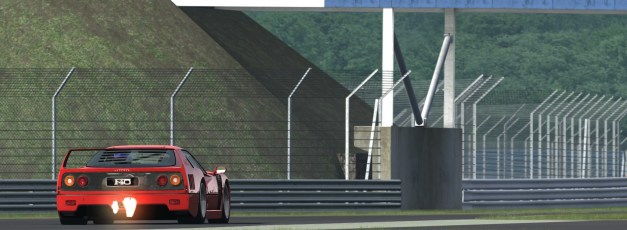


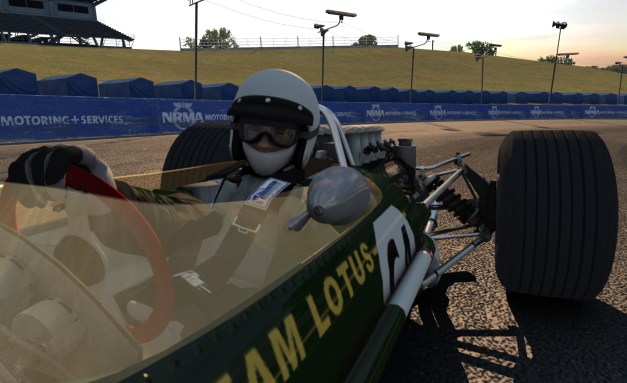



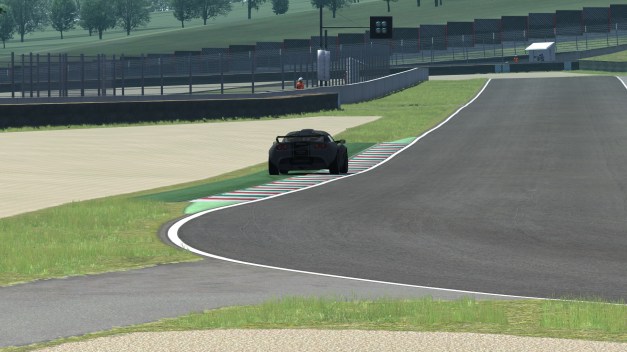
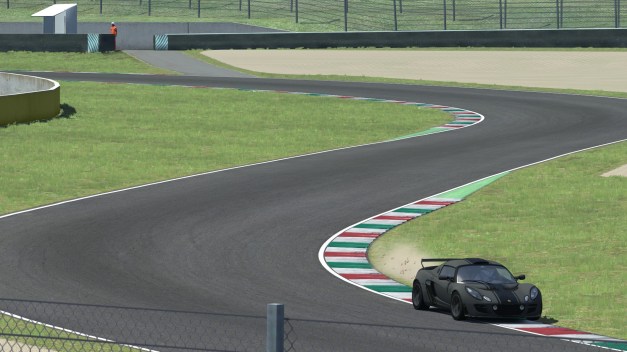
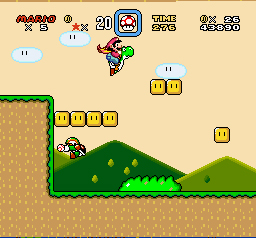


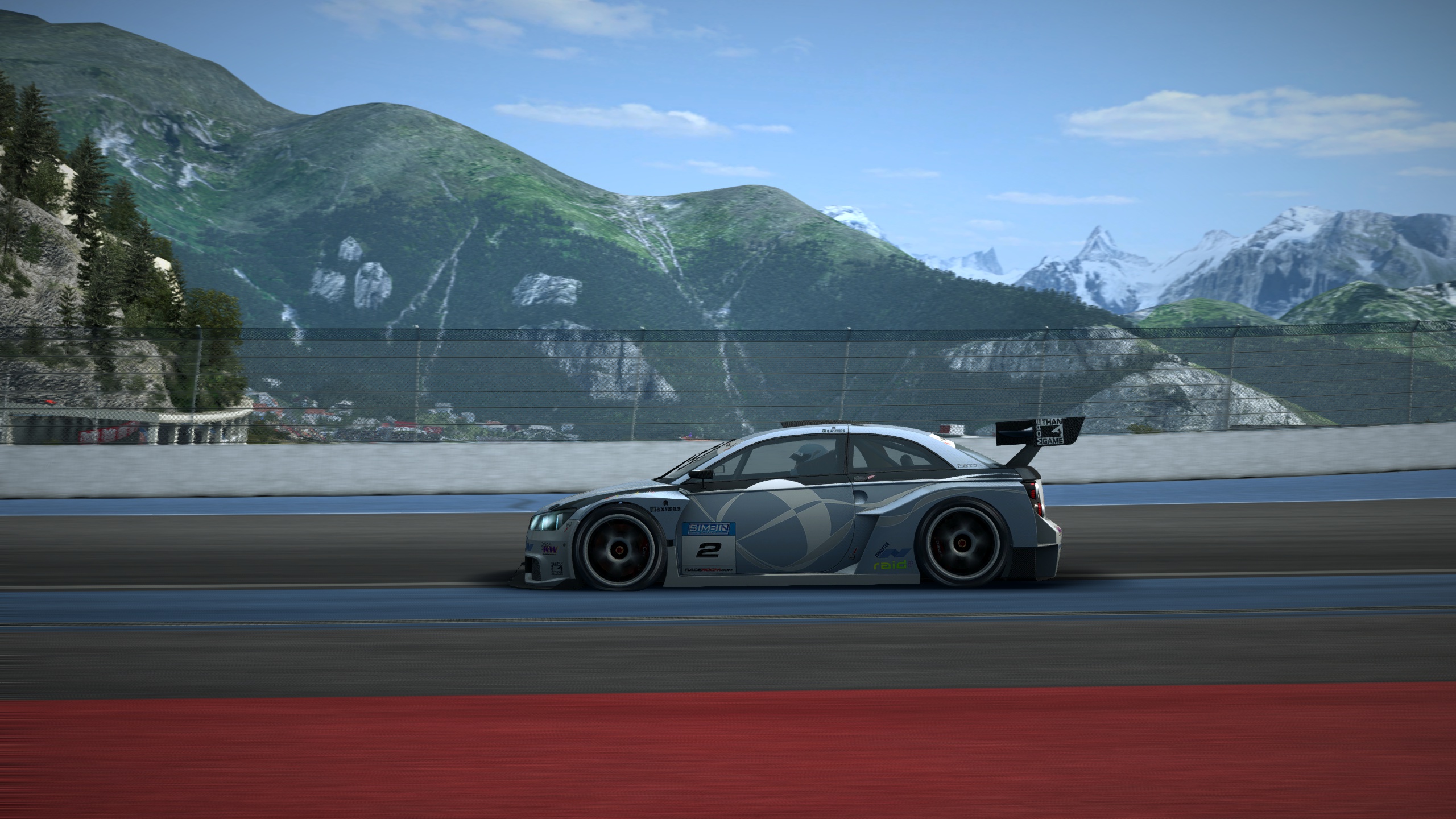


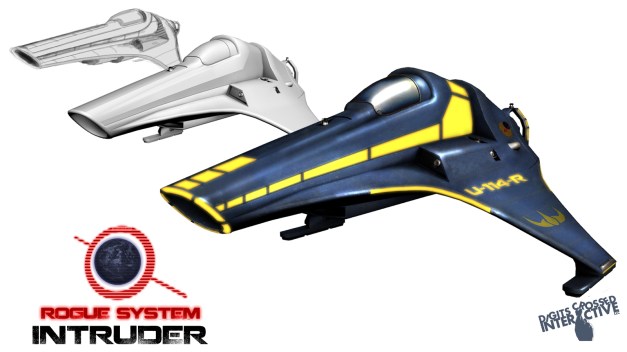
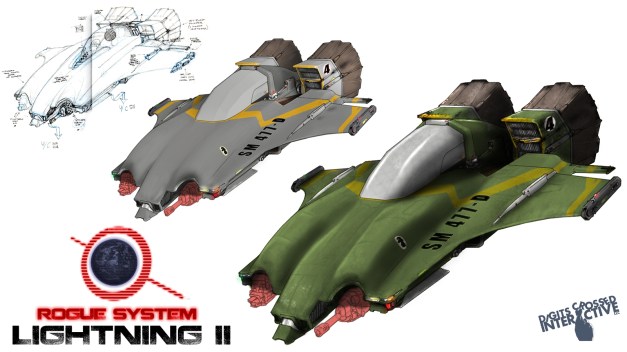




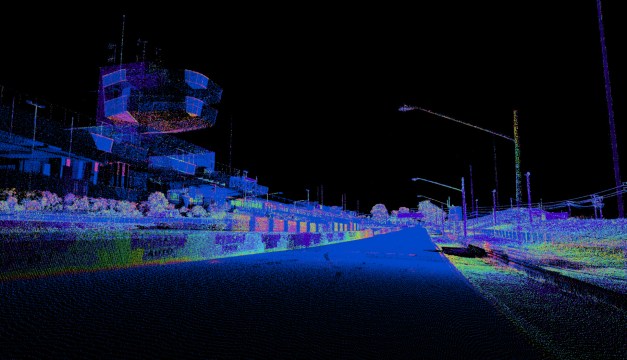

 bobsimmerman
 Eliot
Eliot ljmagyar
 shrapnel1977
 spamsac
 Race and Vehicle Simulations